CEREVITY
™
CEREVITY
™
9 Early Warning Signs of Founder Burnout for Founders in 2026
At a glance
Scroll for full comparison →| Warning sign | Easiest to catch when | Key data point | What it actually looks like |
|---|---|---|---|
| 01. Emotional exhaustion | You dread the inbox you used to love | 1st of 3 WHO burnout dimensions | Energy depletion that sleep no longer fixes |
| 02. Cynicism toward the venture | You catch yourself bad-mouthing your own mission | 2nd WHO dimension | Detachment and negativity about the company |
| 03. Eroded sense of efficacy | Wins stop feeling like wins | 3rd WHO dimension | Believing your work no longer matters or lands |
| 04. Sleep compression | You normalize 5 hour nights | Under 6 hrs impairs judgment | Chronic short sleep degrading decisions |
| 05. Emotional concealment | You hide stress even from cofounders | 81% of founders do not open up | Strategic silence that fuels isolation |
In a survey of more than 400 founders, 72 percent reported that running their company had directly affected their mental health, yet most could not name the moment things turned. Burnout rarely announces itself. It accumulates in the signs you are most likely to explain away as the cost of the job. Ranked below from the most commonly missed to the most commonly noticed, here are nine early markers, what the research says, and when to treat them as a signal rather than a season.
Emotional Exhaustion That Sleep No Longer Repairs
Emotional exhaustion is the first and most reliable warning sign of founder burnout: a depletion of energy that rest stops restoring.
The World Health Organization defines burnout as a syndrome resulting from chronic workplace stress that has not been successfully managed, and lists energy depletion or exhaustion as the first of its three dimensions. For founders the tell is specific: the same tasks that once felt generative now feel like lifting. A weekend off helps for a day, then the depletion returns, because the driver is ongoing load, not a single bad week.
Consider a hypothetical scenario in which a founder still hits every deadline but describes Monday mornings as bracing for impact. In clinical work with entrepreneurs, that mismatch between intact output and vanishing energy is often the earliest thing Dr. Grossman hears, and it tends to precede the visible problems by months.
Cynicism and Detachment Toward the Company You Built
Growing cynicism, a negative or distant attitude toward the venture you once cared about most, is the second WHO dimension of burnout and one founders rarely flag in themselves.
In the Maslach model that the WHO definition draws on, this dimension shows up as depersonalization or cynicism: increased mental distance from the work and a more impersonal, negative stance toward the people and goals around it. For a founder, it can look like eye-rolling at the vision deck, treating customers as interruptions, or quietly disengaging from a roadmap you wrote. Because cynicism can pass for healthy skepticism, it is easy to miss.
Consider a hypothetical scenario in which a founder who once evangelized the product now avoids talking about it at all. Dr. Grossman often points out that the shift is not lost passion, it is a protective withdrawal, and naming it early reopens room to recover the original motivation rather than mourn it.
An Eroded Sense of Efficacy and Accomplishment
A quiet collapse in your sense of competence, feeling that your work no longer matters or makes a difference, is the third dimension of burnout and a frequent precursor to depression.
Reduced professional efficacy means no longer feeling competent or successful at work, even when the objective results say otherwise. Founders experiencing it tend to discount milestones, attribute progress to luck, and set the bar so high that nothing clears it. High efficacy is actually protective against burnout, so when it drains away the buffer goes with it.
Consider a hypothetical scenario in which a founder closes a major round and feels nothing. Dr. Grossman treats that flatness in response to a genuine win as a clinical signal, not ingratitude, because the inability to internalize success is one of the most reliable early bridges from burnout into depression.
Sleep Compression Below Six Hours, Normalized as a Badge
Chronically sleeping under six hours degrades exactly the judgment a founder relies on, and treating it as a point of pride is itself a warning sign.
Research on sleep and cognition shows that total and partial sleep deprivation impair attention, working memory, long-term memory, and decision-making, and push people toward riskier choices. For founders this is not abstract: sleep-deprived entrepreneurs are measurably worse at recognizing viable opportunities and judging the potential of new ideas, the core job of the role. Short sleep often arrives before the emotional signs and accelerates all of them.
Consider a hypothetical scenario in which a founder defends a string of five-hour nights as discipline. Dr. Grossman reframes it plainly: you are not out-working the competition, you are making your most expensive decisions with impaired equipment, and protecting sleep is one of the fastest interventions available.
Emotional Concealment and Founder Isolation
Hiding stress from the people closest to the business, including cofounders, is one of the most common and most dangerous early signs of founder burnout.
Startup Snapshot's report on founder well-being found that 81 percent of founders are not open about their stress, fears, and challenges, worried that vulnerability could damage their reputation or their odds of success, and that more than half hide stress even from their cofounders. That concealment removes the exact early-warning system, honest feedback from people who know you, that would otherwise catch burnout in time.
Consider a hypothetical scenario in which a founder maintains a confident public face while privately running on fumes. Dr. Grossman notes that the gap between the performed self and the actual state is where burnout hides longest, which is why a confidential, outside clinical relationship often surfaces the problem before anyone on the cap table does.
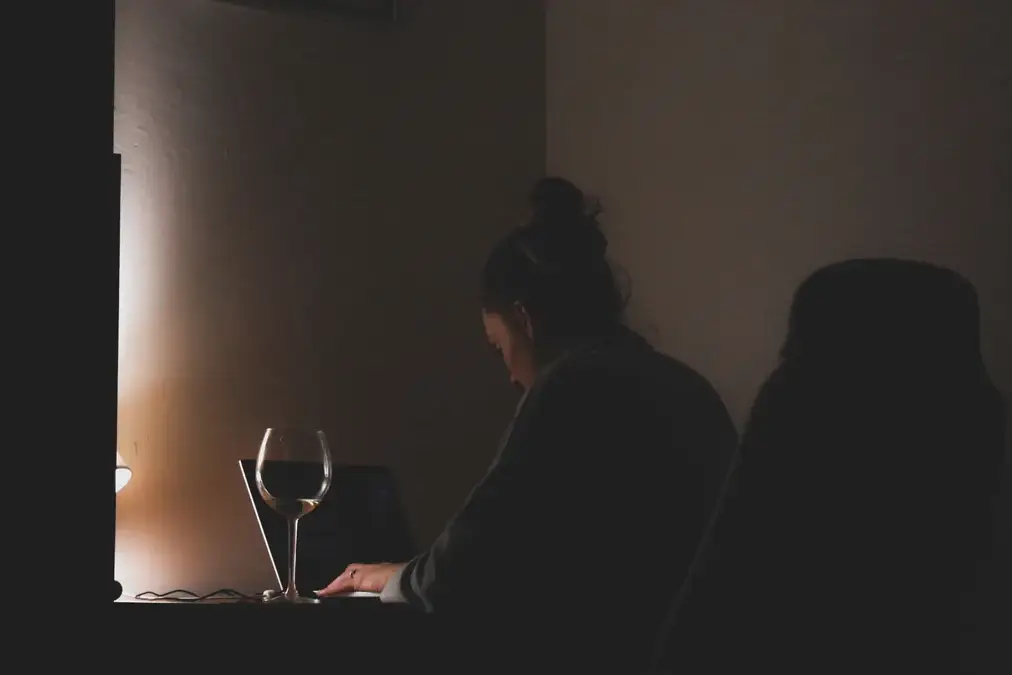
Rising Reliance on Alcohol or Substances to Decompress
A creeping increase in alcohol or other substances used to wind down or push through is a warning sign founders frequently rationalize away.
Research led by Michael Freeman found that entrepreneurs report substance use at higher rates than comparison groups, with substance use frequently functioning as a coping strategy for chronic stress. The early sign is not a crisis, it is a pattern: needing the drink, the edible, or the stimulant to start, sustain, or stop the workday, and noticing the amount or frequency edging up.
Consider a hypothetical scenario in which a founder describes two glasses of wine as the only way to stop the brain at night. Dr. Grossman treats escalating use-to-cope as an early data point rather than a character issue, because addressing the underlying load is usually more effective than white-knuckling the symptom.
Persistent Physical and Somatic Symptoms
Burnout shows up in the body early, through headaches, gut problems, muscle pain, and frequent minor illness, often before founders accept anything is wrong psychologically.
Population research on burnout links it to somatic complaints including aching muscles, headaches, gastrointestinal problems, and disrupted sleep, with gastrointestinal symptoms and anxious tension among the strongest predictors of later burnout. Chronic stress keeps cortisol elevated and can suppress immune function, which is why a run of colds, a flaring gut, or unexplained tension can be the body raising the alarm first.
Consider a hypothetical scenario in which a founder sees three doctors for stomach pain before anyone asks about workload. Dr. Grossman encourages founders to read recurring physical symptoms with no medical explanation as a legitimate burnout signal, not a separate inconvenience to power through.
A Persistent Low Mood That Outlasts the Bad Week
Low mood that no longer lifts when the immediate fire is out can mark the point where burnout is shading into depression.
In Freeman's research, entrepreneurs reported depression at roughly 30 percent, markedly higher than comparison groups. The early distinction that matters is duration: situational stress eases when the situation does, but a low or numb mood that persists across good and bad weeks, paired with loss of interest, is a sign to take seriously rather than schedule around.
Consider a hypothetical scenario in which a founder ships a great quarter and still feels gray for weeks afterward. Dr. Grossman watches for mood that has decoupled from events, because once the emotional weather stops tracking the business reality, evidence-based treatment usually works better than another vacation.
Generalized Anxiety About the Future of the Company
A near-constant background anxiety about the venture's survival, present even when the metrics are fine, is the most openly acknowledged sign and often the last to be addressed.
Startup Snapshot found that 44 percent of founders reported very high levels of stress, 37 percent faced anxiety, and 54 percent were very stressed about the future of their startup. The warning sign is anxiety that has detached from the data: a steady hum of dread that persists through good news, disrupts sleep, and narrows thinking to worst cases. Because it feels like simply caring, it is the sign founders most often name and least often treat.
Consider a hypothetical scenario in which a founder lies awake after a record month, certain it will all unravel. Dr. Grossman frames this as anxiety that has stopped doing useful work, and notes that learning to separate genuine risk from chronic alarm is one of the most practical gains founders make in therapy.
Frequently asked questions
Pulled from real “People Also Ask” queries · marked up with FAQ schema
What is the difference between founder burnout and just being tired? +
Ordinary tiredness lifts with rest. Founder burnout, as the World Health Organization defines it, results from chronic workplace stress that has not been successfully managed and shows up across three dimensions: energy depletion, cynicism or detachment from the work, and a reduced sense of efficacy. If a weekend or a vacation no longer resets you, and the depletion, negativity, and self-doubt persist into good weeks, that points toward burnout rather than simple fatigue.
What is usually the very first sign of founder burnout? +
Emotional exhaustion is typically the earliest and most reliable sign: tasks that once energized you start to drain you, and rest stops fully restoring your energy. It often arrives before the more visible problems, such as missed deadlines or conflict, which is why it is so easy to dismiss as a busy stretch.
How common are mental health struggles among startup founders? +
They are common. A Startup Snapshot survey of more than 400 founders found that 72 percent reported their company had affected their mental health, with 44 percent reporting very high stress and 37 percent reporting anxiety. Separately, research led by Michael Freeman found entrepreneurs report conditions such as depression and substance use at higher rates than comparison groups. Struggling does not make you an outlier among founders.
Can founder burnout be reversed if I catch it early? +
Yes. The earlier the signs are named, the more recoverable burnout tends to be, because they can be addressed before they harden into depression, dependence, or a health crisis. Common early interventions include protecting sleep, restoring honest support so you are not concealing stress, reducing chronic load, and evidence-based therapy. The point of recognizing the signs early is precisely that early action works better than late action.
When should a founder talk to a clinician instead of just pushing through? +
Treat it as a signal, not a season, when the signs persist across good and bad weeks, when low mood or anxiety has detached from what is actually happening in the business, when sleep is chronically compressed, when you are relying on alcohol or substances to function, or when you are hiding your state from everyone around you. CEREVITY, a nationwide network of independent licensed clinicians, offers confidential sessions and works with founders specifically on these patterns.
Founder burnout is most recoverable when you read the early signs as data, not weakness.
If two or more of these signs have outlasted the bad week, a confidential conversation with a clinician who works with founders is a strategic move, not a last resort.
Talk with a CEREVITY clinician →Dr. Grossman is a Licensed Psychologist with more than 15 years of clinical experience working with entrepreneurs, founders, and senior executives navigating burnout, anxiety, and depression. He has sat with founders at every stage of the signs described here, from the first unexplained Monday dread to full collapse, and integrates cognitive behavioral therapy, acceptance and commitment therapy, and behavioral activation calibrated to the working week his clients are actually living. He sees clients through CEREVITY's nationwide telehealth network.