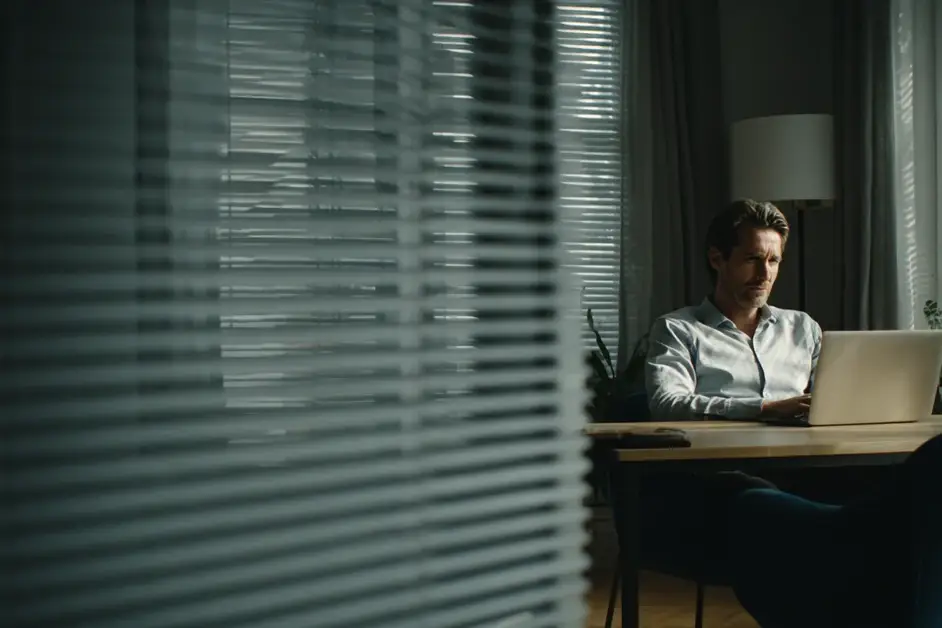
Therapy for Space Tech Executives: when the countdown never stops.
Launch windows do not care about your nervous system. Neither do range schedules, anomaly reviews, or the physics that make your industry unforgiving. Confidential therapy for aerospace and space tech leaders, built around mission-critical reality.
Therapy for space tech executives is confidential, evidence-based care for leaders in aerospace and launch environments: chronic countdown pressure, anomaly aftermath, and careers where a single review can reprice everything. CEREVITY provides private-pay individual therapy nationwide, with no insurance records, clearance-aware privacy, and same-week availability.
The countdown load is a different kind of stress
Most executive stress is chronic and diffuse. Yours is chronic and scheduled: hold points, static fires, launch windows that turn months of work into minutes of consequence. The nervous system treats every countdown as the threat it technically is, and it does not stand down between them.
Add the industry's unforgiving physics, where anomalies are public, expensive, and sometimes career-defining, and you get a stress profile closer to surgeons and special operations than to ordinary corporate life. The research on performance under extreme demand is unambiguous: sustained functioning at that level requires deliberate psychological maintenance, not toughness.
What this industry does to the people running it
Across aerospace and launch clients, the same patterns repeat, and they are specific enough to deserve their own names.
Anomaly Residue
Anomaly Residue is the unprocessed weight a failure investigation leaves in the people who ran it: the replayed telemetry, the what-ifs, the quiet conviction that the next one is theirs. Engineering culture closes out anomalies with corrective actions and never with the humans, so the residue accumulates across a career, one mishap review at a time. It is treatable, and almost nobody treats it.
Countdown physiology
Weeks of compressed sleep and vigilance around every window, with no recovery protocol after. The body learns launch rhythm and forgets it has any other setting.
The range-schedule marriage
Slips, scrubs, and weekends that evaporate on 48 hours notice. Partners stop planning, then stop asking, and the mission quietly becomes the other relationship.
Failure that is public and physical
When your bad quarter is a fireball with a hashtag, shame acquires an audience. Leaders carry anomalies personally while performing institutional calm, and the gap between the two is where the damage lives.
The talent-war pressure cooker
Compressed timelines, funding cliffs, and rivals hiring your best people. Career insecurity research links exactly this volatility to anxiety and depression, independent of how well things are currently going.
Why standard advice fails at the range
Generic stress advice assumes you control your schedule and your stakes. You control neither: the window is the window, and the vehicle either flies or it does not. Care that works here has to fit inside mission reality, which is why executives in this industry need clinicians who treat high-stakes anxiety as a specialization rather than a metaphor.
| The standard advice | How we work instead |
|---|---|
| "Try to keep better work-life boundaries" | We build recovery protocols around campaign rhythm: surge, then deliberate physiological reset, like any other critical system |
| "Do not take the failure personally" | We process Anomaly Residue clinically, because unprocessed mishaps compound into the risk aversion that quietly kills programs |
| "You should talk to someone at work about the pressure" | We provide a channel with zero program visibility, because candor inside a review culture has a price you already know |
My aerospace clients can quantify the margin on every subsystem except themselves. The work usually starts the day they realize they have been running crew-rated review standards on the vehicle and none at all on the person signing the risk acceptance.Trevor Grossman, PhD · Clinician's perspective
What the clinical work looks like
Phase one is physiological: rebuilding sleep and downshift capacity in a system trained to countdown vigilance, because judgment rides on that substrate. Phase two is processing: the anomalies, the near-misses, the program cancellations that never got a funeral. Phase three is structural, the patterns that made the mission the whole identity, work that overlaps with executive burnout treatment when the load has tipped.
Sessions fit campaign life: online from the factory, the range, or home, with extended formats when the work needs room.
Crew-rate the person, not just the vehicle. Confidential, private-pay, mission-schedule friendly.
Get matchedPrivacy, clearances, and why private pay matters here
CEREVITY is private-pay only and does not accept or bill insurance, which means treatment creates no claims history and no diagnosis code in any insurer database. For leaders in an industry adjacent to clearances, ITAR programs, and government customers, that structural privacy is usually the deciding factor, and seeking care through a private channel is consistent with how modern security guidance treats mental health support: getting help responsibly is the favorable fact pattern.
Clinicians in our aerospace and defense executive work understand the disclosure landscape and build care around it.
Questions professionals actually ask
Will therapy affect my security clearance? +
Can this work around a launch campaign schedule? +
Is this only for executives, or engineers and mission staff too? +
Does CEREVITY accept insurance? +
Related reading
Fly the mission. Keep the pilot.
Get matched with a clinician who understands mission-critical pressure, this week. CEREVITY is a nationwide network of independent licensed clinicians. Private-pay only: no insurance records, no waitlists. Sessions in 50-minute, 90-minute, and 3-hour formats. Questions? (562) 295-6650.
Get matched with a clinician Or review session pricing first- Frontiers in Psychology (2025). Making the best better: performance psychology integrated in special operation forces training.
- Ronchetti, M., et al., PubMed Central, National Library of Medicine (2021). Perceived Job Insecurity and Anxiety: A Multilevel Analysis on Male and Female Workers in European Countries.
- Job insecurity, social media exposure, and job stress, PubMed Central (2023). The Role of Job Insecurity, Social Media Exposure, and Job Stress in Predicting Anxiety Among White-Collar Employees.
- American Psychological Association (2023). Stress: What It Is and How to Manage It.
- National Institute of Mental Health (2024). Anxiety Disorders.

Dr. Grossman is a Licensed Psychologist with more than 15 years of clinical experience working with entrepreneurs, founders, senior executives, and high-responsibility professionals navigating burnout, anxiety, and depression. His work integrates cognitive behavioral therapy, acceptance and commitment therapy, behavioral activation, and schema-informed approaches calibrated to the working week his clients are actually living in. He sees clients via CEREVITY's nationwide telehealth network.