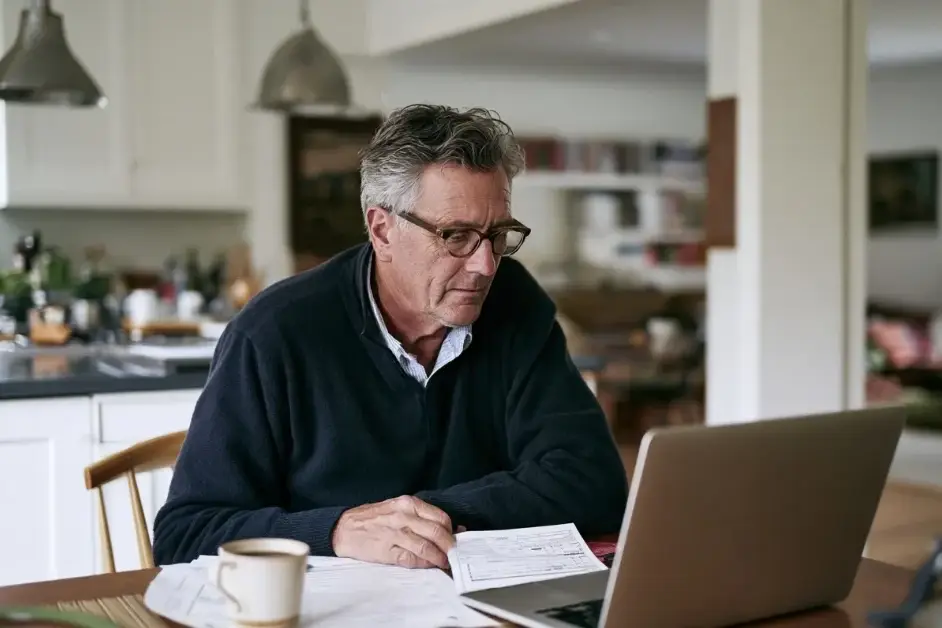
Mindfulness-Based Therapy Online: what actually works, minus the app hype.
Mindfulness has been oversold as an app subscription and undersold as clinical treatment. The clinical versions, MBCT and mindfulness-integrated therapy, have real evidence, translate well to telehealth, and are nothing like three minutes of breathing between meetings.
Mindfulness-based therapy online is clinician-delivered treatment, such as mindfulness-based cognitive therapy and mindfulness-integrated CBT, conducted over secure video. Evidence shows video-delivered psychotherapy performs comparably to in-person care. CEREVITY provides private-pay mindfulness-integrated individual therapy nationwide with complete privacy and same-week availability.
Clinical mindfulness is not app mindfulness
The word mindfulness now covers two different products. One is consumer content: guided audio, streaks, calming interfaces. The other is clinical treatment: structured protocols like mindfulness-based cognitive therapy, delivered by a licensed clinician, with a treatment plan and outcome tracking.
The consumer version is fine as maintenance. The clinical version treats conditions. Confusing the two is how high performers end up meditating daily while their anxiety quietly compounds untreated.
What the evidence actually supports
Strip the hype and a defensible picture remains.
The App Ceiling
The App Ceiling is the point where consumer mindfulness stops helping: the streak is intact, the breathing is practiced, and the underlying anxiety, rumination, or low mood has not moved in months. Apps build a skill; they do not treat a condition. Recognizing the ceiling is the difference between maintenance and medicine, and most high performers hit it long before they name it.
Video delivery holds up
Meta-analysis of randomized trials finds video-delivered psychotherapy comparable to in-person treatment for depression, with equivalent dropout. The screen is not a compromise; it is a delivery route.
Mindfulness protocols have real evidence
Structured, clinician-led mindfulness interventions show measurable effects on anxiety, mood, and relapse prevention in the research literature, including systematic mapping across dozens of trials.
Integration beats isolation
Mindfulness works best woven into a broader clinical frame, with CBT, with emotion-focused work, rather than as a standalone ritual. The skill serves the treatment, not the reverse.
The relationship still carries it
Across modalities, the therapeutic alliance remains a top predictor of outcomes. A clinician who knows your history beats an algorithm that knows your streak.
Who benefits most from the mindfulness-integrated approach
The strongest fits: professionals whose minds will not stop working after work, rumination and Sunday-night planning loops; people with recurrent low mood, where MBCT has its deepest evidence; and high performers who want skills alongside insight. It pairs naturally with anxiety and depression treatment when symptoms are active.
| The standard advice | How we work instead |
|---|---|
| "Just meditate ten minutes a day" | We prescribe mindfulness the way medicine is prescribed: specific practice, specific dose, tied to a treatment plan |
| "The app has a course for stress" | A clinician adapts the work weekly to what your mind actually did, which no pre-recorded course can |
| "Mindfulness fixes everything eventually" | We are honest about limits: mindfulness is one instrument, and some conditions need different tools first |
Half my professional clients arrive with a two-year meditation streak and untreated anxiety. The streak is real discipline, and I honor it. Then we do the part the app could not: turning attention into treatment, aimed at the specific machinery keeping them up at night.Lucia Hernandez, PhD · Clinician's perspective
What online sessions actually look like
Sessions run over secure video in standard 50-minute formats: part skills training, live and adjusted in the moment, part clinical work on what surfaces when the mind slows down, which is where mindfulness earns its keep. Practices between sessions are prescribed specifically, not generically, and the work sits inside a full individual therapy frame with goals and outcome tracking.
Past the App Ceiling? The clinical version starts this week.
Get matchedThe honest limits
Mindfulness-based approaches are not universal medicine. Acute crisis needs stabilization first. Unprocessed trauma can make meditative attention flooding rather than calming, and a trauma-informed clinician sequences accordingly. And motivation-collapsed depression often needs behavioral activation before attention training helps. This is exactly why the clinical version matters: a clinician chooses the tool; an app cannot.
CEREVITY is private-pay only, with no insurance involvement of any kind: your treatment creates no claims history and no diagnosis codes anywhere.
Questions professionals actually ask
Is online mindfulness therapy as effective as in person? +
I already meditate. What would therapy add? +
How fast does MBCT-style work show results? +
Does CEREVITY accept insurance? +
Related reading
Keep your practice. Add the treatment.
Get matched with a clinician who integrates mindfulness into real clinical work. CEREVITY is a nationwide network of independent licensed clinicians. Private-pay only: no insurance records, no waitlists. Sessions in 50-minute, 90-minute, and 3-hour formats. Questions? (562) 295-6650.
Get matched with a clinician Or review session pricing first- Giovanetti, A. K., et al., Telemedicine and e-Health (2022). Teletherapy Versus In-Person Psychotherapy for Depression: A Meta-Analysis of Randomized Controlled Trials.
- Systematic map of mindfulness-based interventions and attachment, PubMed Central (2025). Mindfulness, Loving-Kindness, and Compassion-Based Meditation Interventions: A Systematic Map.
- Therapy Without Borders, medRxiv systematic review (2024). Telehealth's Role in Expanding Mental Health Access: A Systematic Review.
- Online CBT-based and mindfulness interventions RCT protocol, PubMed Central (2020). A randomized controlled trial to improve psychological detachment from work and well-being.
- American Psychological Association (2023). Understanding Psychotherapy and How It Works.

Dr. Hernandez is a Licensed Psychologist providing therapy for executives, entrepreneurs, and high-achieving professionals. Her work integrates evidence-based cognitive and psychodynamic approaches with a culturally responsive lens, calibrated to the realities of high-responsibility careers. She sees clients via CEREVITY's nationwide telehealth network.