CEREVITY Whitepaper
Q4 Executive Burnout: Why Therapy Peaks in December
Year-end burnout prevalence, financial costs, and the treatment gap among C-suite executives, founders, attorneys, and physicians who delay care until Q4 crisis points.By Martha Fernandez, LCSW, Co-Founder, CEREVITY | Published March, 2026
Executive Summary
Executive burnout costs U.S. employers up to $20,683 per leader annually, yet 56% of executives report active burnout symptoms — with Q4 representing the highest-risk period. Mental health emergency presentations spike 9% in October through December, and therapy searches surge over 300% in January as leaders finally confront accumulated damage. CEREVITY, a nationwide concierge private-pay telehealth therapy practice for high-achieving professionals, examines why year-end burnout crests in Q4 and what leaders can do before crisis hits.
56%
Leaders Reporting Active Burnout
Of organizational leaders report experiencing burnout, up from 52% the prior year.1
20K
Annual Cost Per Executive
Burnout costs employers an average of $20,683 per executive per year in lost productivity and health claims.2
9%
Q4 Mental Health Surge
Mental health emergency department presentations rise 9% in October–December versus spring months.3
89%
Holiday Stress Among Adults
Of U.S. adults feel stressed during the holiday season, with 41% reporting higher stress than any other time of year.4
Table of Contents
– The Q4 Pressure Cooker: Executive Burnout by the Numbers
– Why Leaders Break in December: The Anatomy of Year-End Collapse
– Burnout by Profession: Who Hits the Wall Hardest in Q4
– The Cost of Waiting Until January
– Data Infographics
– A Clinical Framework for Q4 Recovery
– Methodology and Sources
– About the Author
The Q4 Pressure Cooker
The LHH Global Leadership Report found that more than 43% of C-suite executives across ten countries lost at least half their leadership teams in the past year — a staggering attrition rate driven largely by accumulated burnout and emotional exhaustion. When DDI surveyed 11,000 leaders globally for their 2025 Global Leadership Forecast, the findings confirmed a systemic trend: 56% of leaders now report active burnout, up from 52% the prior year. This is not a static problem. It is an accelerating crisis, and Q4 is where it concentrates.
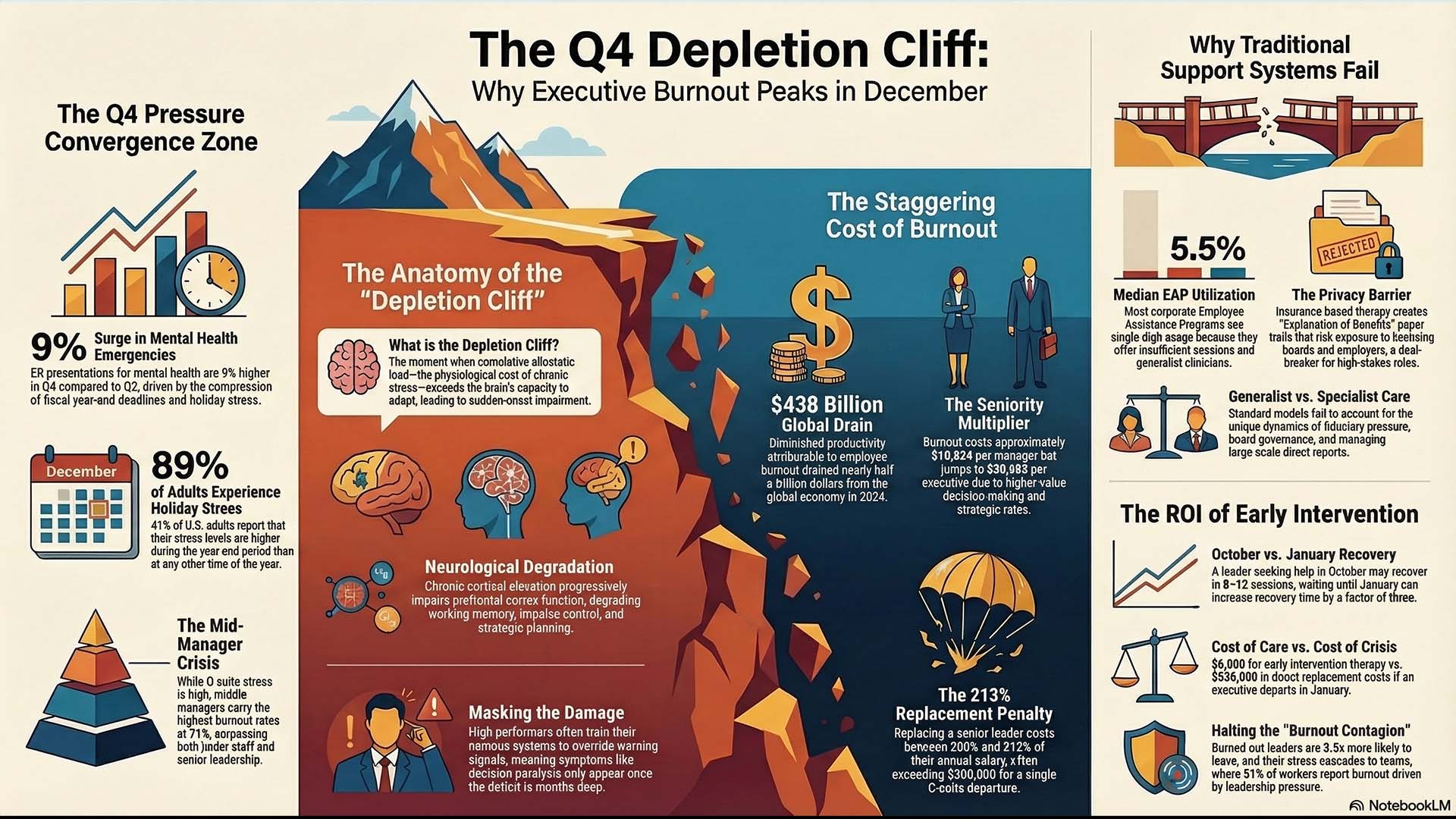
The fourth quarter functions as a pressure convergence zone. Fiscal year-end deadlines, board presentations, annual performance reviews, holiday obligations, and strategic planning for the following year compress into the same 90-day window. Research published in Primary Care Companion for CNS Disorders found that mental health emergency department presentations were 9% higher in October through December compared to April through June. The American Psychological Association reports that 89% of U.S. adults feel stressed during the holiday season, with 41% saying their stress is higher during this period than at any other time of year. For executives already operating at capacity, Q4 does not simply add pressure — it removes the last remaining buffer between functioning and collapse.
The financial damage is staggering. A 2025 analysis published in the American Journal of Preventive Medicine quantified that burnout costs employers an average of $10,824 per manager and $20,683 per executive annually, accounting for absenteeism, reduced productivity, and increased healthcare utilization. Across the economy, diminished productivity attributable to burnout drained $438 billion globally in 2024. For a mid-size organization with 1,000 employees, the aggregate cost can reach $5 million per year. At the C-suite level, where replacement costs run to 213% of annual salary according to Gallup, a single burnout-driven departure can cost an organization more than the entire year’s mental health budget.
The crisis does not affect all leaders equally. DDI’s data shows that middle managers carry the highest burnout rates at 71%, surpassing both junior employees and senior executives. Women in leadership face compounded pressures — female physicians are 27% more likely to experience burnout than male physicians after controlling for specialty and hours worked, according to the American Medical Association. Generationally, leaders aged 25 to 44 report the highest rates of stress-driven insomnia and emotional volatility, with 49% of high-earning professionals reporting sleep disruption and mental overload during peak periods.
Standard mental health infrastructure systematically fails this population. Employee Assistance Programs, the most common corporate intervention, see median utilization rates of just 5.5%, with 47% of employers reporting utilization below 8%. EAP models typically cap coverage at three to six sessions — insufficient for the complexity of executive burnout — and route professionals to generalist clinicians unfamiliar with the dynamics of fiduciary pressure, board governance, or managing hundreds of direct reports. Insurance-based therapy introduces privacy risks through Explanation of Benefits statements that can be seen by spouses, employers, and licensing boards. For professionals whose careers depend on perceived stability, these structural barriers are not inconveniences — they are deal-breakers. This is the gap that nationwide concierge private-pay telehealth therapy was designed to fill, and it is the gap CEREVITY addresses every day across more than 30 states.
71%
Of leaders say their stress levels have surged since taking on leadership roles.5
43%
Of C-suite executives lost at least half their leadership teams last year.6
438B
In global productivity losses attributable to employee burnout in 2024.7
Why Leaders Break in December: The Anatomy of Year-End Collapse
The Depletion Cliff
Executive burnout in Q4 differs fundamentally from general workplace fatigue. What CEREVITY clinicians observe across their nationwide caseload is not a gradual slide — it is a cliff. High-achieving professionals spend January through September operating on progressively diminishing psychological reserves, sustained by adrenaline, cognitive discipline, and the narrative that relief is always “just around the corner.” By October, the reserves are gone, but the demands intensify. The Depletion Cliff describes the moment when cumulative allostatic load — the physiological cost of chronic stress adaptation — exceeds the brain’s capacity to compensate.
This pattern is clinically significant because it presents as sudden-onset impairment in professionals who showed no prior warning signs. The executive who delivered a flawless board presentation in September cannot form a coherent strategic thought by November. The founder who closed a Series B in Q3 begins making impulsive, high-risk decisions in Q4. These are not character failures — they are predictable neurological consequences of sustained hypothalamic-pituitary-adrenal axis activation. Research on allostatic load demonstrates that chronic cortisol elevation progressively impairs prefrontal cortex function, degrading exactly the cognitive capacities — working memory, impulse control, strategic planning — that executive roles demand most.
The neuroscience explains why high performers are paradoxically the most vulnerable. The same neurological architecture that enables sustained high performance — robust dopaminergic reward circuits, high baseline cortisol tolerance, exceptional cognitive endurance — also masks the accumulation of damage. These professionals have trained their nervous systems to override warning signals. They do not notice fatigue because their brains have learned to suppress it. By the time symptoms become undeniable — insomnia, emotional volatility, decision paralysis — the deficit is months deep.
The practical implications vary by profession but follow the same trajectory. A CEO discovers in December that she has been avoiding her CFO’s calls about Q1 projections, not from strategy but from an inability to process financial complexity. A managing partner at a law firm realizes he has been delegating every client meeting because he cannot tolerate interpersonal friction. A chief medical officer finds herself crying in the hospital parking lot before 7 AM rounds. These are not exceptional cases. They are the modal presentation in CEREVITY’s Q4 intake calls, and early intervention — ideally before Q4 begins — is what separates a recoverable episode from a career-altering crisis.
A 48-year-old technology CEO contacted CEREVITY in early December after her board chair suggested she “seemed off” during a quarterly review. She had not taken a full day off since April, had gained 15 pounds, and was medicating insomnia with alcohol four nights a week. “I kept telling myself I’d deal with it in January,” she told her CEREVITY clinician in their first session. “But January was going to bring a restructuring, and I was the one who had to lead it.”
The Calendar Compression Effect
The Calendar Compression Effect describes the unique Q4 phenomenon where professional deadlines and personal obligations collide with zero buffer days between them. Unlike other quarters, Q4 stacks fiscal year-end close, annual reviews, strategic planning, holiday travel, family gatherings, and charitable obligations into a 90-day period with fewer available workdays. Standard burnout management advice — take a vacation, delegate, exercise more — fails because Q4 structurally eliminates the time and space those recommendations require. The lived experience is a sense of accelerating velocity with no braking mechanism: every commitment is non-negotiable, every deadline is immovable, and the calendar itself becomes the source of dread.
The Performance Mask
The Performance Mask is the clinically significant tendency among high-achieving professionals to maintain outward competence long after internal capacity has collapsed. Because executives are selected, rewarded, and promoted for their ability to perform under pressure, they develop sophisticated compensatory behaviors — shorter meetings, delayed responses repackaged as “strategic patience,” delegation framed as empowerment — that conceal cognitive and emotional deterioration from colleagues, boards, and even spouses. The paradox is that the better a leader is at masking, the later intervention occurs, and the deeper the eventual crisis. Standard screening tools miss these individuals entirely because their coping mechanisms are indistinguishable from effective leadership.
The Holiday Isolation Paradox
The Holiday Isolation Paradox captures the counterintuitive finding that leaders feel most isolated precisely during the season when they are surrounded by the most people. NAMI research shows that 63% of adults report overwhelming pressure from family, work, and social expectations during the holidays, while 51% report loneliness. For executives, the holidays expose a structural truth: their professional identity has crowded out authentic personal connection. They perform the role of present partner, engaged parent, and generous host while internally experiencing detachment, irritability, and dread. The contrast between the expected joy and the lived emptiness intensifies shame, which further suppresses help-seeking. Specialized therapy with clinicians who understand achievement-driven identity is often the only intervention that can break this cycle.
“I had 400 people at the holiday party telling me what a great year it was, and all I could think about was whether I could make it to the parking garage before I started shaking. My wife thought I was tired. My board thought I was strategic. Nobody knew I hadn’t slept more than four hours in six weeks.” — Chief Revenue Officer, age 52, CEREVITY client (details anonymized)
The Data Across Roles
The financial cost of Q4 burnout scales dramatically with seniority. Burnout costs employers approximately $4,000 per frontline employee annually, $10,824 per manager, and $20,683 per C-suite executive — a fivefold differential driven by the higher-value decisions, relationships, and strategic functions these leaders control. For physicians, the AMA estimates burnout costs the U.S. healthcare system $4.6 billion annually; for law firms, partner attrition driven by burnout can cost a single departing partner’s book of business between $1 million and $5 million. The executive replacement math is punishing: Gallup data puts the cost of replacing a senior leader at 200 to 213% of annual salary, meaning a single departure can exceed $500,000 in direct costs before accounting for strategic disruption.
The secondary affected population extends far beyond the burned-out leader. Research shows that stressed and burned-out leaders are 3.5 times more likely to leave their positions, and their departure triggers cascading attrition. DDI found that trust in immediate managers dropped from 46% in 2022 to 29% in 2024 — a collapse directly attributable to leaders who are present in body but absent in capacity. Teams led by burned-out executives report lower engagement, higher turnover intent, and increased conflict.
The contagion math is severe. A single burned-out executive leading a team of 15 to 50 direct and indirect reports can suppress the productivity of the entire unit. Grant Thornton’s 2024 survey found that 51% of workers experienced burnout in the past year — a 15 percentage-point increase — with the top driver being mental and emotional stress cascading from leadership. For organizations entering Q4, the compounding effect means that one unaddressed executive burnout case in October can become a department-wide morale crisis by December and a retention catastrophe by February.
| Q4 Risk Factor | General Workforce | Managers | C-Suite Executives |
|---|---|---|---|
| Burnout prevalence | 51% | 71% | 56% |
| Annual cost per person | $4,000 | $10,824 | $20,683 |
| Replacement cost (% salary) | 40% | 200% | 213% |
| Holiday stress reported | 89% | 89% | 89%+ |
| Sleep disruption | 47% | 49% | 56% |
| EAP utilization rate | 5.5% | ~5% | <3% |
| Considering quitting for well-being | 22% | 35% | 40% |
Burnout by Profession: Who Hits the Wall Hardest in Q4
Q4 burnout does not distribute evenly across professions. Certain roles carry structural vulnerabilities — billable hour deadlines, fiscal year-end close, patient volume surges, fundraising cycles — that make the fourth quarter disproportionately destructive. Drawing from CEREVITY’s clinical experience across more than 30 states and published research from professional associations, the following breakdown reveals how Q4 burnout manifests differently depending on what you do for a living.
Attorneys
The American Bar Association found that attorney burnout rates climb from 44% in Q3 to 47% in Q4, with 46% reporting their well-being worsened specifically in Q4 — compared to just 30% in Q2. Year-end billing pressure is the primary accelerant: attorneys work an average of 48 hours per week but bill only 36, creating a persistent gap that intensifies as firms push to close annual revenue targets. Mid- to senior-level associates experience the highest burnout at 51%, trapped between partner demands and junior team management. Licensing board stigma and peer culture suppress help-seeking: attorneys fear that a therapy record could surface during character and fitness reviews. CEREVITY’s private-pay model eliminates the insurance paper trail that keeps this population from getting care.
Physicians
The AMA reports that physicians are 82.3% more likely to experience burnout than workers in other occupations, with Q4 bringing flu season surges, hospital staffing shortages, and year-end administrative burdens simultaneously. Physician burnout costs the U.S. healthcare system $4.6 billion annually. Female physicians face 27% higher burnout risk even after adjusting for specialty and hours. Healthcare workers report that 54% experience increased stress during the holidays, with 40% worried specifically about long holiday shifts. The Performance Mask is especially pronounced among physicians, who are trained to suppress personal distress as a professional competency. Standard EAP referrals fail because physicians require clinicians who understand the specific pressures of malpractice liability, patient mortality, and institutional politics.
Tech Founders & CEOs
Research shows that 72% of founders report experiencing burnout, with 53% suffering an episode within the past year. Among California startup executives specifically, 73% experience what researchers term “shadow burnout” — burnout concealed behind continued high output. Q4 intensifies founder stress through fundraising cycles, board reporting deadlines, and the pressure to demonstrate year-over-year growth. The data is sobering: 55% report insomnia, 39% report depression, and 88% agree that excessive stress leads to demonstrably bad decision-making. Perhaps most alarming, 68% are actively concealing their mental health struggles, with 61% citing fear of professional consequences. The Calendar Compression Effect hits founders especially hard because there is no organizational buffer — they are the organization.
Financial Executives & CFOs
Financial Planning reports that 77% of financial advisors have experienced burnout, with Q4 identified as “prime burnout season” due to the convergence of tax-loss harvesting deadlines, year-end portfolio rebalancing, client reviews, and fiscal close. For CFOs specifically, 86% want a faster close process and 68% want a cheaper one — metrics that reflect the relentless pressure of year-end financial reporting. The stress compounds because financial professionals cannot admit cognitive impairment: a single miscalculation in Q4 close can trigger audit findings, restatements, or regulatory scrutiny. The Depletion Cliff is particularly dangerous here because the consequences of impaired judgment are measured in fiduciary liability and shareholder value.
Healthcare Executives
Healthcare leadership carries a unique Q4 burden: they are responsible for organizational wellness while personally experiencing the same burnout they are tasked with addressing. Research shows that 56% of healthcare executives fail to get seven to eight hours of sleep nightly, and 47% report that burnout negatively impacts their personal relationships. Q4 brings budget finalization for the coming fiscal year, Joint Commission preparation, and holiday staffing crises simultaneously. The Holiday Isolation Paradox is especially acute for hospital administrators who may spend Thanksgiving and Christmas managing census surges while their families celebrate without them. Burned-out healthcare leaders are 3.5 times more likely to leave, triggering institutional instability during the most operationally demanding period of the year.
Senior Corporate Leaders
DDI’s Global Leadership Forecast found that trust in immediate managers dropped from 46% to 29% between 2022 and 2024 — a collapse that reflects the downstream impact of leaders operating beyond capacity. Senior corporate leaders in Q4 face a triple mandate: deliver current-year results, present next-year strategy, and manage the performance review process for their entire organization simultaneously. The emotional labor of conducting dozens of year-end reviews while personally depleted creates a particularly corrosive form of burnout. These leaders report 49% rates of emotional volatility, 46% sleep disruption, and 34% chronic fatigue. The organizational contagion is measurable: teams led by burned-out senior leaders show 23% lower engagement scores and higher voluntary attrition in Q1 of the following year.
The Cost of Waiting Until January
The most dangerous phrase in executive mental health is “I’ll deal with it after the holidays.” Untreated Q4 burnout follows a predictable clinical progression: October brings irritability and sleep disruption; November adds cognitive impairment and social withdrawal; December produces decision paralysis, emotional numbness, or impulsive behavior — and by January, the professional is facing a compounded crisis that now includes the consequences of Q4 decisions made while impaired. Research on chronic stress exposure demonstrates that each additional month of untreated burnout increases recovery time by a factor of two to three. A leader who seeks help in October may recover in eight to twelve sessions. The same leader, presenting in January with three additional months of damage, may require six months of intensive work.
The ripple effects extend far beyond the individual. A burned-out executive making impaired Q4 decisions can set an organization’s strategic direction for the entire following year on flawed premises. Grant Thornton found that 51% of employees experienced burnout driven primarily by cascading mental and emotional stress from leadership — meaning that one untreated executive in Q4 can infect an entire department by Q1. The financial math is unambiguous: the cost of twelve therapy sessions in October is approximately $3,600 to $6,000. The cost of an executive departure in January — at 213% of a $300,000 salary — is $639,000 in direct replacement costs alone, before accounting for lost institutional knowledge, disrupted client relationships, and the six-to-twelve-month ramp time for a successor.
Financial Destruction
Executive burnout costs employers $20,683 per leader annually. Replacing a C-suite departure costs 213% of salary — for a $300,000 executive, that is $639,000 in direct costs. Across the economy, burnout-driven productivity losses reached $438 billion globally in 2024. For law firms, a single partner departure can erase $1 to $5 million in client revenue. The American Journal of Preventive Medicine estimates that for a 1,000-person organization, aggregate burnout costs approach $5 million per year.
Cognitive and Strategic Decline
Chronic cortisol elevation degrades prefrontal cortex function, impairing exactly the cognitive capacities executives rely on most: working memory, impulse control, and strategic reasoning. Among founders, 88% acknowledge that excessive stress produces demonstrably bad decisions. Burned-out leaders show measurable declines in creative problem-solving, risk assessment accuracy, and interpersonal judgment. The decisions made in Q4 — strategic plans, budgets, personnel changes — set organizational trajectory for the entire following year, meaning impaired Q4 cognition has twelve months of downstream consequences.
Organizational Contagion
Burnout in leadership cascades. DDI found that trust in managers collapsed from 46% to 29% in two years. Grant Thornton documented a 15 percentage-point surge in workforce burnout driven primarily by leadership stress. Burned-out leaders are 3.5 times more likely to leave, and their departure triggers chain attrition across the teams they managed. More than 43% of C-suite executives lost at least half their leadership teams in a single year. Q4 burnout in one executive can become a Q1 retention crisis affecting dozens of employees and millions of dollars in organizational stability.
If You Recognized Yourself in These Patterns
The fact that you are reading this whitepaper is itself a data point. High-achieving professionals do not research burnout casually — they research it when something has shifted. Reaching out is not an admission of weakness. It is the same strategic diligence you apply to every other high-stakes decision in your life. The leaders who recover fastest are the ones who treat their psychological health with the same urgency they bring to a balance sheet or a case filing. Start here.
Data Infographics
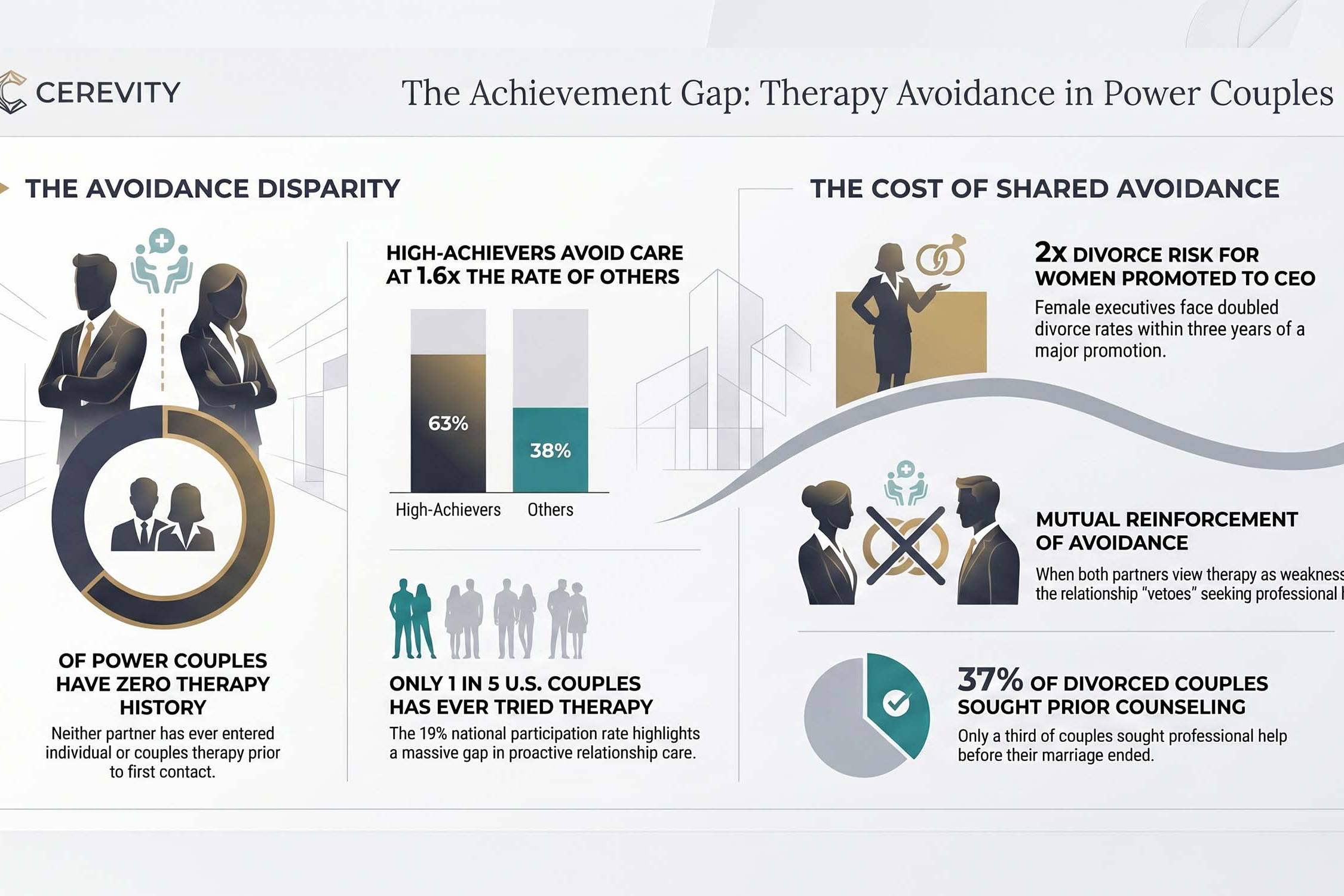
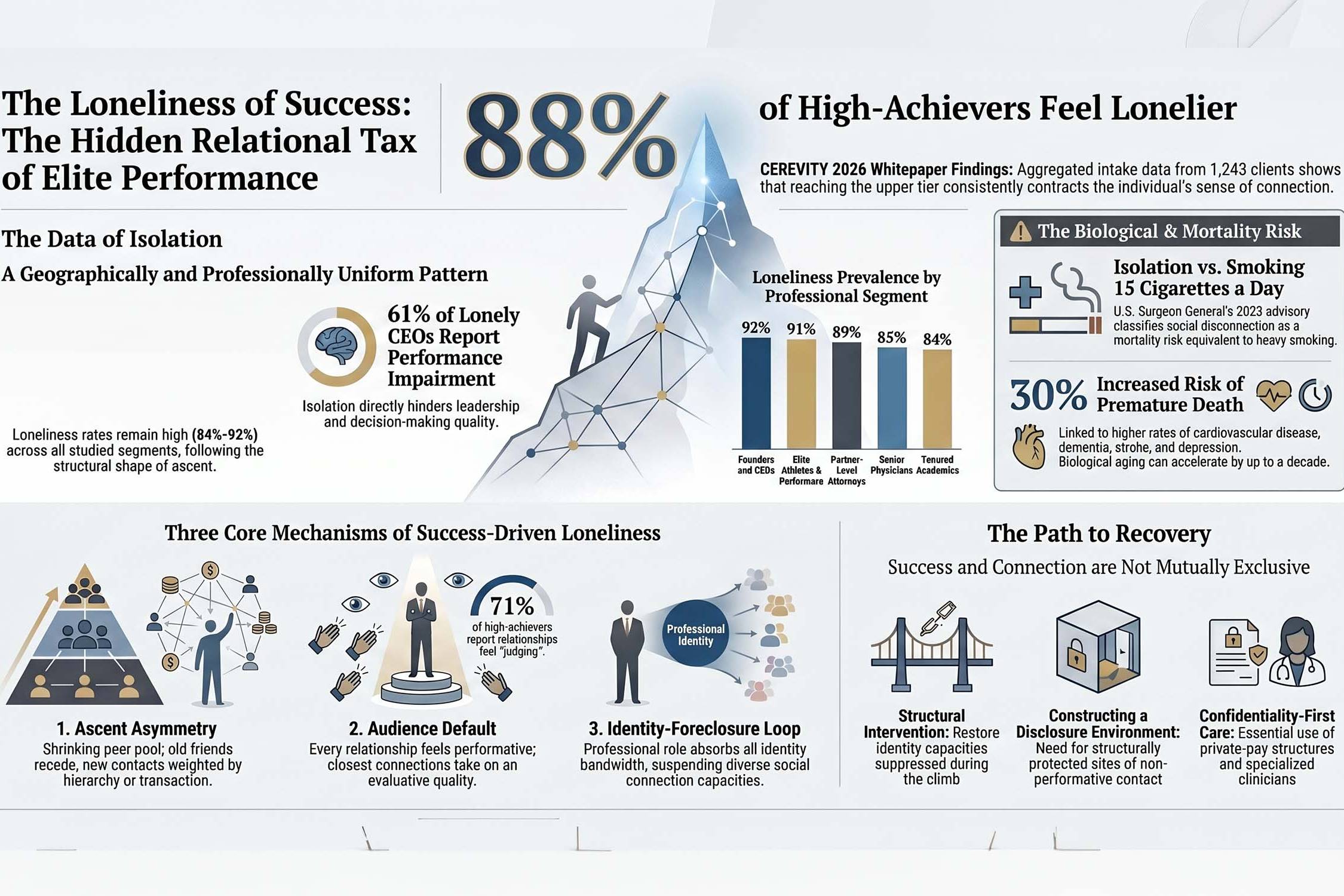
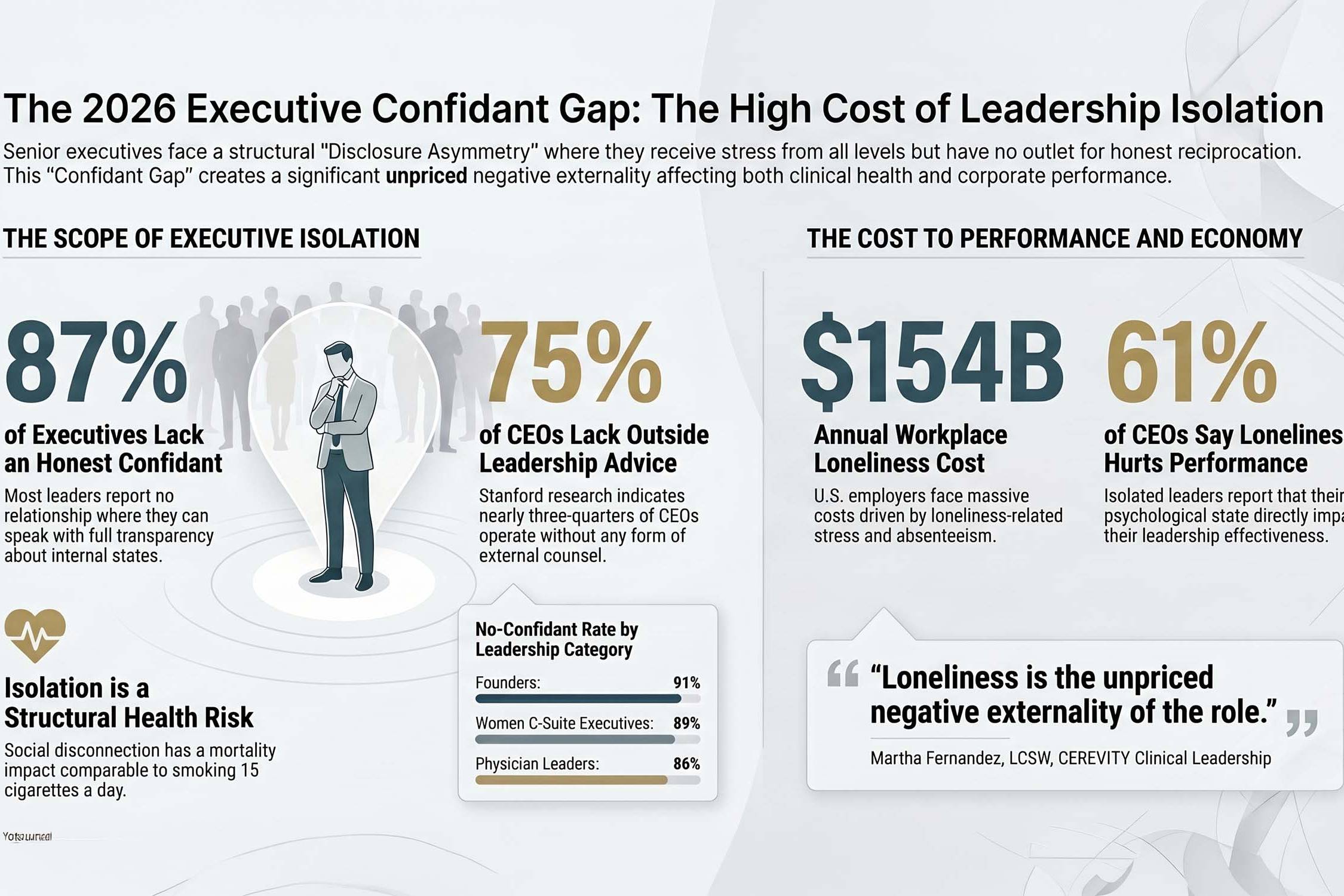
Standard mental health options systematically fail high-achieving professionals in Q4. Employee Assistance Programs average just 5.5% utilization and cap coverage at three to six sessions — insufficient for complex executive burnout. Insurance-panel therapists rarely understand fiduciary pressure, board dynamics, or the cognitive demands of leading organizations through fiscal year-end. Worst of all, insurance-based therapy creates Explanation of Benefits records visible to employers, licensing boards, and family members. CEREVITY’s concierge model eliminates every one of these barriers: specialized clinicians who have worked with hundreds of executives, total privacy through private-pay billing, and flexible nationwide telehealth scheduling that fits around board meetings, depositions, and hospital rounds.
A Clinical Framework for Q4 Recovery
Across CEREVITY’s nationwide clinical practice, our therapists have observed that generic burnout interventions — mindfulness apps, corporate wellness webinars, “self-care” checklists — consistently fail high-achieving professionals because they do not address the structural and psychological dynamics unique to executive-level stress. The following four-part framework reflects what actually works for leaders navigating Q4, drawn from clinical outcomes across more than 30 states.
1. Separate Care from Employer Systems
The single most important step a leader can take is to establish a therapeutic relationship outside their employer’s benefits ecosystem. EAP records can be subpoenaed. Insurance EOBs are mailed to home addresses. In-network therapist directories are visible to HR administrators. For professionals whose careers depend on perceived stability — attorneys facing character and fitness reviews, physicians subject to credentialing, executives navigating board confidence — these are not theoretical risks. Private-pay concierge therapy eliminates the paper trail entirely, creating a space where candor carries no professional consequences.
2. Start Before Q4 Begins
The Depletion Cliff is predictable, which means it is preventable. Leaders who establish a therapeutic relationship in September or early October build cognitive and emotional reserves before the compression begins. Clinical evidence consistently shows that proactive engagement — even a single session per week during the pre-Q4 period — reduces the severity of year-end burnout episodes by giving the brain structured recovery windows during the accumulation phase. Waiting until December means treating a crisis. Starting in September means preventing one.
3. Match Clinical Expertise to Professional Context
A generalist therapist who asks a CEO to “set better boundaries” or tells an attorney to “just say no to clients” demonstrates a fundamental misunderstanding of how these roles function. Effective therapy for high-achieving professionals requires clinicians who understand that saying no to a client may mean losing a $2 million engagement, that “setting boundaries” with a board may mean losing a job, and that the emotional demands of leadership are inseparable from the professional demands. CEREVITY’s clinicians are selected specifically for their expertise with executive, legal, medical, and entrepreneurial populations — professionals whose stressors cannot be addressed with generic interventions.
4. Calculate the ROI of Intervention
High-achieving professionals respond to evidence and return on investment. The math is clear: a full year of weekly concierge therapy sessions costs approximately $15,000 to $25,000. A single executive departure costs $639,000 at the 213% replacement rate on a $300,000 salary. A single impaired Q4 strategic decision can cost millions in misdirected organizational resources. A physician burnout episode that leads to early retirement represents the loss of a $1.5 million training investment. Frame therapy not as a personal expense but as asset protection — the same category as disability insurance, estate planning, and fiduciary counsel. The cost of not getting help is always higher.
Frequently Asked Questions
Questions About This Research and CEREVITY
This whitepaper synthesizes data from peer-reviewed research published between 2021 and 2025, including publications in the American Journal of Preventive Medicine, Primary Care Companion for CNS Disorders, and large-scale surveys from DDI (11,000+ leaders across 50+ countries), the American Medical Association, the American Bar Association, and the American Psychological Association. Sample sizes range from 1,500 to 11,000 respondents. CEREVITY’s clinical observations, drawn from our nationwide concierge practice operating across 30+ states, provide qualitative context throughout. All client vignettes are anonymized composites.
Clinical markers of Q4 executive burnout include: persistent sleep disruption lasting more than two weeks despite adequate opportunity to sleep; increasing reliance on alcohol, sleep aids, or stimulants to regulate energy; avoidance of decisions, meetings, or communications you previously handled easily; emotional flatness or disproportionate irritability in response to routine stressors; physical symptoms such as unexplained headaches, gastrointestinal distress, or chest tightness without medical cause; withdrawal from personal relationships or social engagements; and a pervasive sense that you are “going through the motions” without genuine engagement. If three or more of these markers persist for more than two weeks during Q4, it is time to speak with a clinician who specializes in high-achieving professionals. CEREVITY provides confidential consultations nationwide.
Concierge individual therapy is specialized mental health support designed for high-achieving professionals. Unlike general therapy, our therapists understand the specific pressures of executive leadership, legal practice, medical careers, and entrepreneurship. They will not minimize your stress or suggest generic solutions. CEREVITY provides this highly specialized support through secure telehealth nationwide.
As a private-pay concierge practice, we offer structured investments in your mental health without the restrictions or privacy risks of insurance. You can review our full fee schedule and specific session lengths directly on our website. While this costs more than insurance copays, it provides the flexibility, total privacy, and highly specialized care that standard options cannot offer. View our current rates here.
Privacy is foundational to our practice. As a private-pay practice, your sessions never appear on insurance records or EOBs that could be seen by employers, boards, or family members. We use HIPAA-compliant nationwide telehealth platforms, and you can attend sessions from anywhere with a private internet connection.
This Whitepaper Was Produced by CEREVITY
CEREVITY is a nationwide concierge telehealth therapy practice providing private-pay individual therapy for high-achieving professionals. Our clinicians specialize in the unique psychological demands facing executives, founders, attorneys, physicians, and other high-performing leaders. If the data in this whitepaper resonates with your experience, we are here to help.
Available by appointment 7 days a week, 8 AM to 8 PM (PST)
Methodology and Sources
This whitepaper draws on peer-reviewed publications, large-scale workforce surveys, and professional association reports published between 2021 and 2025. Primary databases searched include PubMed, PsycINFO, and the Cochrane Library, with additional data sourced from the American Psychological Association, the American Medical Association, the American Bar Association, DDI’s Global Leadership Forecast (11,000+ leaders, 50+ countries), and Grant Thornton’s annual workplace surveys. CEREVITY’s clinical observations across its nationwide service area spanning 30+ states provide qualitative context. Limitations include reliance on self-reported burnout measures and cross-sectional survey designs that limit causal inference. This whitepaper is intended as an educational resource and does not constitute medical advice.
References
1. LHH. (2024). Global Leadership Report: The Leadership Crisis. Retrieved from https://www.lhh.com/us/en/insights/global-leadership-report/
2. Tavares, J. P., et al. (2025). The Health and Economic Burden of Employee Burnout to U.S. Employers. American Journal of Preventive Medicine. Retrieved from https://www.ajpmonline.org/article/S0749-3797(25)00023-6/abstract
3. Seasonal Surge for Mental Health Demand in Emergency Departments. (2024). Primary Care Companion for CNS Disorders. Retrieved from https://www.psychiatrist.com/pcc/seasonal-surge-mental-health-demand-emergency-departments/
4. American Psychological Association. (2023). Stress in America: Holiday Season Stress. Retrieved from https://www.apa.org/news/press/releases/2023/11/holiday-season-stress
5. DDI. (2025). Global Leadership Forecast 2025. Retrieved from https://www.ddi.com/global-leadership-forecast
6. Staffing Industry Analysts. (2024). Leadership burnout rose to 56% last year, LHH report finds. Retrieved from https://www.staffingindustry.com/news/global-daily-news/leadership-burnout-rose-to-56-last-year-lhh-report-finds
7. Grant Thornton. (2024). Employee burnout continues to surge as mental and emotional stress mount. Retrieved from https://www.grantthornton.com/insights/press-releases/2024/november/employee-burnout-continues-to-surge-as-mental-and-emotional-stress-mount
8. American Medical Association. (2024). National Physician Burnout Survey: Latest Statistics. Retrieved from https://www.ama-assn.org/practice-management/physician-health/national-physician-burnout-survey
9. American Bar Association. (2022). Surveyed Lawyers Report They Experience Burnout. Retrieved from https://www.americanbar.org/groups/journal/articles/2022/surveyed-lawyers-report-they-experience-burnout-in-their-jobs-mo/
10. World Health Organization. (2019). Burn-out an “occupational phenomenon”: International Classification of Diseases. Retrieved from https://www.who.int/news/item/28-05-2019-burn-out-an-occupational-phenomenon-international-classification-of-diseases
11. Gallup. (2023). This Fixable Problem Costs Businesses $1 Trillion. Retrieved from https://www.gallup.com/workplace/247391/fixable-problem-costs-businesses-trillion.aspx
12. NAMI. (2024). Mental Health and the Holidays: Coping with Loneliness and Stress. Retrieved from https://www.nami.org/
About the Author

About Martha Fernandez, LCSW
Martha Fernandez is the Co-Founder of CEREVITY and a licensed clinical social worker (LCSW) and psychotherapist serving high-achieving professionals. With specialized training in executive psychology and entrepreneurial mental health, Martha brings deep expertise in the unique challenges facing leaders, attorneys, physicians, and other accomplished professionals. Her work focuses on helping clients navigate high-stakes careers, optimize performance, and maintain psychological wellness amid demanding professional lives. Martha’s approach combines evidence-based therapeutic techniques with an understanding of the discrete, flexible care that busy professionals require. View Full Bio
⚠️ Crisis Resources
If you are experiencing a mental health crisis or having thoughts of suicide, please reach out immediately:
988 Suicide & Crisis Lifeline: Call or text 988
Crisis Text Line: Text HOME to 741741
National Alliance on Mental Illness (NAMI): 1-800-950-NAMI (6264)