Therapist Insights / Healthcare Professionals
Second victim syndrome after a medical error.
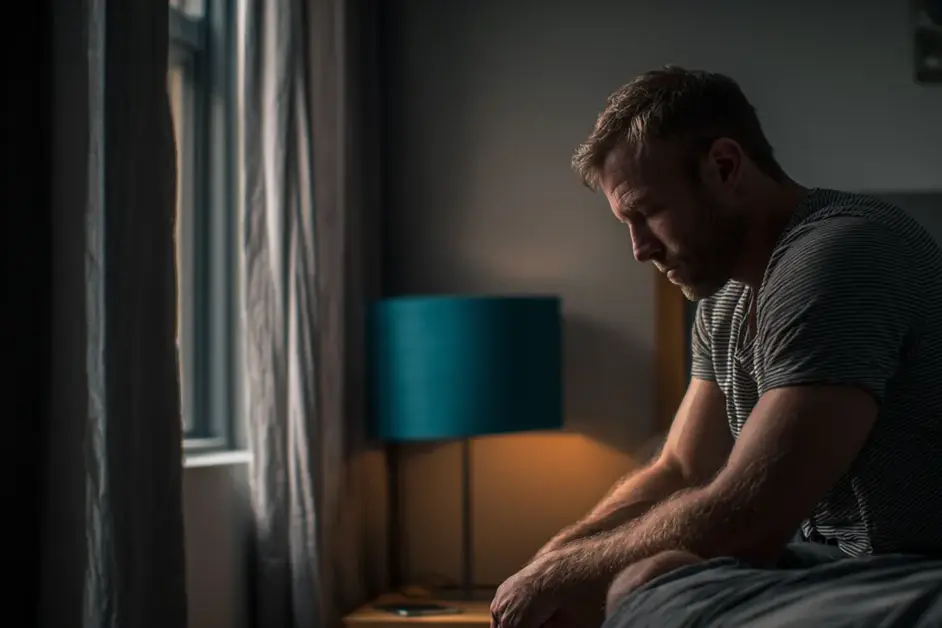
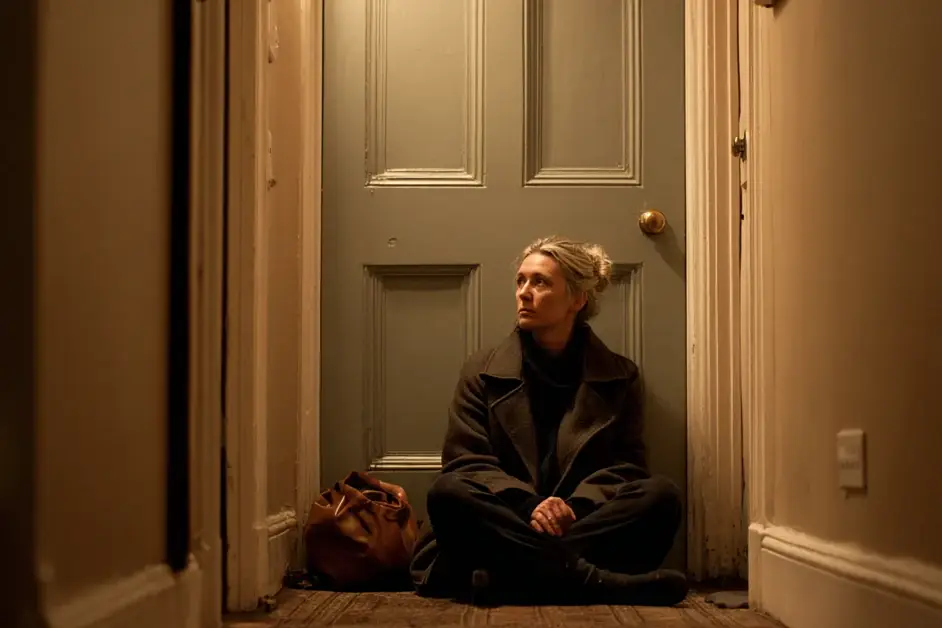
The same ninety seconds on a loop, at the sink and at three in the morning. Checking the order again after the shift has ended. Hesitating half a beat on a case that looks like the one you cannot put down. Second victim syndrome is the name for what a medical error or adverse event leaves in the clinician, and it is common, predictable and treatable.

THE QUICK TAKEAWAY
Second victim syndrome is the emotional distress a clinician experiences after being involved in a medical error, adverse event or unexpected patient harm: intrusive replay, guilt, anxiety and loss of confidence. Studies report it in 10% to 43% of involved healthcare professionals, and in some settings more. CEREVITY clinicians treat it privately, outside your institution, nationwide by telehealth, with no insurance claim filed.
§01 / 09 / Definition
What second victim syndrome is.
Second victim syndrome, also called the second victim phenomenon, describes healthcare professionals who are involved in an unanticipated adverse event, error or patient injury and are then harmed by it themselves: replaying the event, doubting their competence and fearing discovery. It is a recognized pattern, not a formal diagnosis.
Albert Wu named it in a 2000 BMJ editorial. Patients are the first and obvious victims of medical mistakes, he wrote, but doctors are wounded by the same errors. He described what nearly every clinician recognizes: the sick realization, the urge to see whether anyone noticed, the agonizing over whether and how to tell, and later the event replaying over and over. He also described what usually follows, which is not support. Colleagues offer reassurance that is grudging or qualified, institutions look for an individual to blame, and morbidity and mortality conferences examine the medical facts rather than anyone's feelings. Twenty-five years on, the term has a body of research behind it, and it has critics: a 2019 BMJ article by patient advocates argued the word victim sits badly beside the patient and family who were harmed. That objection is worth hearing. You do not have to adopt the label to be treated for what the event did to you, held separately from what it did to the patient, because both are real and neither cancels the other.
Six patterns that follow an adverse event
The replay that arrives uninvited
The same decision, re-run hundreds of times, looking for the version where it goes differently. Intrusive reflection is one of the recognized stages of the second victim experience.
Checking that never feels finished
Verifying the dose, then verifying it again, then going back after the shift. The vigilance feels like conscience, and it quietly costs hours and sleep.
Avoiding the case that looks like yours
Trading assignments, hesitating on the same procedure, steering away from the presentation. Reviews describe defensive changes in clinical work after adverse events.
The silence around you
Colleagues say it could have happened to anyone, then change the subject. The event is discussed everywhere except with you.
Losing trust in your own judgment
Calls you have made competently for years now come with doubt, and the hesitation itself becomes frightening.
The exit thought
Looking up what else the license could do, then feeling like a fraud for looking. Questioning your career choice is part of the pattern researchers describe.
▶ Research
A 2023 meta-analysis of studies in intensive care units found that 58% of ICU healthcare workers had experienced second victim syndrome. Reported symptoms included guilt, anxiety, anger at oneself and lower self-confidence, and about 20% took more than a year to recover or did not recover at all.1
What the evidence means for clinicians
It is common
Reviews report second victim responses in 10.4% to 43.3% of involved clinicians, and in 58% of ICU healthcare workers.
It can last
In the ICU studies, about one in five took more than a year to recover or did not recover. Waiting it out is not a reliable plan.
It is predictable
Six recognizable stages, from chaos to moving on, mean the path can be anticipated and the support timed to it.
Who else the event reaches
Second victim syndrome is carried privately, but its effects travel. Research on second victims describes consequences for patients, colleagues and the clinician's own life.
Your next patients
Fear and avoidance can make care more defensive. Treating the distress is part of returning to the clinician you were before the event.
Your team
Withdrawal and irritability are visible to colleagues even when the cause is not. Teams often sense the change before anyone names it.
Your family
The replay comes home, along with the shortened fuse, the lost sleep and the long silences about work.
§02 / 09 / Telehealth
Why second victims rarely get help.
Healthcare professionals rarely get help for second victim syndrome because medicine still treats error as individual failure, internal support is limited, and anything said inside the institution can feel connected to the review of the event. CEREVITY offers treatment outside that system.
A culture with no place for mistakes
Wu described hospitals reacting to every error as an anomaly to be blamed on one person. That framing makes seeking help feel like an admission.
Support that stops short of treatment
Peer support and debriefs help many people. In one widely described three-tier model, about 10% of affected clinicians need professional counseling beyond peer support.
Fear about where it goes
When a review is open, clinicians worry that anything said inside the building travels. Care outside the institution removes that question from the room.
§03 / 09 / Mechanism
Why treatment outside your institution matters.
Institutional programs such as peer support are valuable early on, but they sit inside the organization that may also be reviewing the event, and most are not designed to treat ongoing symptoms. CEREVITY clinicians are independently licensed and entirely outside your workplace, and they treat healthcare professionals as clients, not as cases to evaluate.
Patient-safety guidance describes tiers of support after an adverse event: recognition and support from colleagues and local leaders first, then trained peer supporters, then access to professional counseling for the smaller group whose distress does not settle. That design is sound. The gap is the last tier. When the replay, the avoidance or the low mood is still there weeks later, a conversation with a peer is no longer the right tool.
Treatment is different from a debrief. A clinician takes a history, sorts out whether the picture looks like an acute stress response, depression, grief, a trauma response or several at once, and treats what is there. CEREVITY clinicians provide treatment only. They do not write evaluations, opinions or reports for an employer, a carrier or a review, and questions about what any proceeding requires belong with your own counsel.
For doctors, there is a specific reason to choose care outside the building: confidential care for doctors worried about credentialing is designed around exactly this concern. Matching across CEREVITY's nationwide network of independent licensed clinicians pairs you with someone who understands clinical work, and you can read about matching people to the clinician who fits before committing.
► Standard advice vs. CEREVITY's approach
Standard therapy
"Wait for the review to close before dealing with any of it"
CEREVITY
"Treat the symptoms now; the review and your recovery run on different clocks"
Standard therapy
"Tell yourself it was not your fault and move on"
CEREVITY
"Separate accountability from self-punishment, so one stays and the other stops"
Standard therapy
"Rely on a debrief to resolve months of replay and dread"
CEREVITY
"Get a licensed clinician to assess and treat what the event left behind"
| Standard insurance-based therapy | CEREVITY's specialized approach |
|---|---|
| "Wait for the review to close before dealing with any of it" | "Treat the symptoms now; the review and your recovery run on different clocks" |
| "Tell yourself it was not your fault and move on" | "Separate accountability from self-punishment, so one stays and the other stops" |
| "Rely on a debrief to resolve months of replay and dread" | "Get a licensed clinician to assess and treat what the event left behind" |
A break from the page
You sat with the family. Someone should sit with you.
A first conversation is confidential and commits you to nothing. CEREVITY is a nationwide network of independent licensed clinicians working private-pay, with no insurance claim submitted. Start with a private inquiry.
§04 / 09 / Cases
Common patterns after an adverse event.
The clinician who is still working full shifts and not sleeping
The patternMonths after a patient death they were part of, they are still checking every order twice and telling no one. Sleep has gone, and the work itself has started to feel unsafe because of how tired they are.
What we addressTreatment targets the replay and the sleep first, because they cost the most. Where the picture includes persistent low mood or worry, the work draws on anxiety and depression therapy alongside trauma-focused methods.
The clinician who freezes on the case that looks like the one
The patternCompetent for years, they now hesitate on a specific procedure or presentation. They have started quietly avoiding it, and the avoidance is shrinking their practice of medicine.
What we addressGraded, deliberate re-approach rebuilds confidence in steps rather than by willpower. Clinicians draw on treatment for anxiety tied to consequence, not temperament. When a patient died, what grief and loss therapy actually involves is often part of the work too.
§05 / 09 / Methods
How second victim syndrome is treated.
CEREVITY clinicians treat second victim syndrome by first mapping what the event left: sleep, intrusive replay, avoidance, mood and anything that predates the event. They then match evidence-based methods to that picture rather than applying one protocol to every healthcare professional.
Trauma-focused CBT
When intrusive memory drives the picture, the event is approached deliberately and in a controlled way until it stops arriving on its own schedule.
Cognitive work on responsibility
Examines the standard you hold yourself to, which in medicine is often zero error and perfect foresight, and separates real accountability from global self-condemnation.
Graded re-approach
Rebuilds the clinical work that avoidance has narrowed, in planned steps, so confidence returns through experience rather than reassurance.
Compassion-focused therapy
Targets harsh self-criticism directly, building the capacity to respond to your own mistake the way you would to a respected colleague's.
Grief and meaning work
When a patient died, makes room for grief that has had no place to go, and for the question of what the event now means for your career.
§06 / 09 / Investment
What therapy after a medical error costs.
Private-pay, nationwide, and outside your institution
At CEREVITY, our online individual therapy sessions are structured as a direct investment in your mental agility and overall well-being. The investment includes:
- Licensed mental health professional specializing in therapy for healthcare professionals
- Evidence-based, one-on-one approaches proven effective for trauma responses, anxiety and depression
- Flexible online scheduling including evenings and weekends
- Complete privacy with no insurance involvement or red tape
- Healthcare professionals expertise and understanding
- Outcome tracking and progress measurement
The cost of post-event distress going unaddressed
Consider what is at stake when post-event distress goes unaddressed:
What private-pay buys you
No insurance claim, so no diagnosis code sent to a payer, no carrier record and no session cap. The only record is the clinical file your licensed clinician keeps under HIPAA. Nothing goes to your hospital, your group or anyone reviewing the event. View our current rates here.
Session formats that fit shift work
Sessions run by secure telehealth across all 50 states, seven days a week, which reaches post-call mornings and days off. Most people settle into regular weekly appointments. Some open with a 90-minute appointment because the account of the event runs long, and some use the 3-hour intensive format between rotations.
§07 / 09 / Evidence
What the research shows about second victims.
The phenomenon is common across settings. A systematic review by Seys and colleagues, drawing on 32 research articles, found the prevalence of second victims after an adverse event ranged from 10.4% to 43.3%, with emotional, cognitive and behavioral reactions and both defensive and constructive changes in clinical work afterward. The Agency for Healthcare Research and Quality's patient-safety primer notes that as many as half of all clinicians will be involved in a serious adverse event at least once in their careers, and cites a survey of more than 3,000 physicians in the United States and Canada in which 81% reported some degree of job-related stress linked to an event.
► What the research reports
of intensive care unit healthcare workers had experienced second victim syndrome, pooled across five studies.
Naya et al., PLOS ONE, 2023
range of second victim prevalence after an adverse event across studies in a systematic review.
Seys et al., Evaluation and the Health Professions, 2013
of more than 3,000 surveyed physicians reported some job-related stress linked to an event they were involved in.
AHRQ PSNet, Second Victims primer
Recovery tends to follow a recognizable path. Interviewing 31 second victims, Scott and colleagues identified six stages: chaos and accident response, intrusive reflections, restoring personal integrity, enduring the inquisition, obtaining emotional first aid, and moving on. Their conclusion was that the post-event trajectory is largely predictable, which means support can be offered early rather than after the damage is done. The same primer is candid that the science of interventions for second victims is still in its infancy, so treatment draws on established methods for trauma, anxiety, grief and self-criticism, applied to this specific situation.
§§ / 09 / Recap
Key takeaways.
Five things to remember
- Second victim syndrome is common Studies report it in a large share of clinicians involved in adverse events, across professions and settings.
- It follows a recognizable path Replay, self-doubt and fear of the inquiry are expected stages, not signs that you are uniquely failing.
- Peer support is a start, not the whole answer When symptoms persist, a licensed clinician can assess and treat what the event left behind.
- Private and outside the building CEREVITY treats healthcare professionals by telehealth across all 50 states, with no insurance claim filed.
- CEREVITY provides this through online individual therapy nationwide, with full privacy through its private-pay concierge network and no insurance involvement.
§08 / 09 / FAQ
Frequently asked questions.
What is second victim syndrome?
Second victim syndrome is the emotional and psychological distress healthcare professionals experience after being involved in a medical error, an adverse event or unexpected patient harm. The term was coined by Albert Wu in 2000 and is also called the second victim phenomenon. CEREVITY clinicians treat it as a real clinical problem, separate from any review of the event.
What are the symptoms of second victim syndrome?
Second victim syndrome symptoms commonly include intrusive replay of the event, guilt, anxiety, anger at oneself, lower self-confidence, poor sleep, avoidance of similar cases and doubts about one's career. A 2023 meta-analysis of ICU studies reported guilt in 12% to 68% of affected workers and anxiety in 38% to 63%. CEREVITY clinicians assess which of these are driving distress.
What are examples of second victim syndrome?
Second victim syndrome examples include a nurse who rechecks every medication long after a dosing error, a surgeon who avoids a procedure after a complication, or a resident who replays a missed diagnosis every night. Each is a healthcare professional harmed by an event that harmed a patient first. CEREVITY clinicians treat these patterns without asking you to minimize the event.
How common is second victim syndrome in nursing and healthcare?
Second victim syndrome is common across healthcare, including nursing. A systematic review found prevalence after adverse events ranging from 10.4% to 43.3%, and a 2023 meta-analysis found 58% of intensive care unit healthcare workers had experienced it. AHRQ notes that as many as half of clinicians will be involved in a serious adverse event. CEREVITY works with nurses, physicians and other healthcare professionals.
What is the second victim phenomenon in the context of medical errors?
The second victim phenomenon describes how a medical error harms not only the patient, the first victim, but also the clinician involved. Albert Wu wrote that doctors are wounded by the same errors and rarely receive real support. Some patient advocates have argued the term should be abandoned out of respect for harmed patients. CEREVITY clinicians focus on the distress itself, whatever it is called.
What is the second victim experience like over time?
The second victim experience often moves through six stages identified by Scott and colleagues: chaos and accident response, intrusive reflections, restoring personal integrity, enduring the inquisition, obtaining emotional first aid, and moving on. Not everyone moves on well; in ICU studies about one in five took over a year or did not recover. CEREVITY clinicians help healthcare professionals through the stages that stall.
How does your private-pay pricing structure work?
As a private-pay concierge network, we offer structured investments in your mental health without the restrictions or privacy risks of insurance. You can review our full fee schedule and specific session lengths directly on our website. While this costs more than insurance copays, it provides the flexibility, total privacy, and highly specialized care that standard options cannot offer. View our current rates here.
How do you protect my privacy?
Privacy is foundational to our network. As a private-pay network, your sessions never appear on insurance records or EOBs that could be seen by employers, boards, or family members. We use HIPAA-compliant nationwide telehealth platforms, and you can attend sessions from anywhere with a private internet connection.
§09 / 09 / Begin
You have carried this alone long enough.
If the event is still replaying, treatment outside your institution is one call away. Call (562) 295-6650 or start with a private inquiry. If you are not safe right now, call or text 988.
Seven days a week · Sessions 7 AM to 9 PM Pacific · Support 8 AM to 8 PM Pacific§§ / Author
About Benjamin Rosen, PsyD.
Benjamin Rosen, PsyD
Dr. Rosen is a Licensed Psychologist working with high-achieving professionals across executive, entrepreneurial, legal, and medical fields. His work integrates evidence-based cognitive and psychodynamic approaches with a deep understanding of the pressures that come with sustained responsibility. He sees clients via CEREVITY's nationwide telehealth network. View full bio →
§§ / Sources
References.
- BMJ. Medical Error: The Second Victim. The Doctor Who Makes the Mistake Needs Help Too (Wu). 2000. doi.org
- Evaluation and the Health Professions. Health Care Professionals as Second Victims After Adverse Events: A Systematic Review (Seys et al.). 2013. doi.org
- PLOS ONE. Second Victim Syndrome in Intensive Care Unit Healthcare Workers: A Systematic Review and Meta-Analysis on Types, Prevalence, Risk Factors, and Recovery Time (Naya et al.). 2023. doi.org
- Quality and Safety in Health Care. The Natural History of Recovery for the Healthcare Provider Second Victim After Adverse Patient Events (Scott et al.). 2009. doi.org
- AHRQ Patient Safety Network. Second Victims: Support for Clinicians Involved in Errors and Adverse Events (Patient Safety Primer). 2025. psnet.ahrq.gov
- CEREVITY. Grief and loss therapy.
- CEREVITY. High-stakes anxiety therapy.
- CEREVITY. High-functioning anxiety and depression therapy.
⚠ Crisis resources
If you are experiencing a mental health crisis or having thoughts of suicide, please reach out immediately. 988 Suicide & Crisis Lifeline · Call or text 988 Crisis Text Line · Text HOME to 741741 National Alliance on Mental Illness · 1-800-950-NAMI (6264)