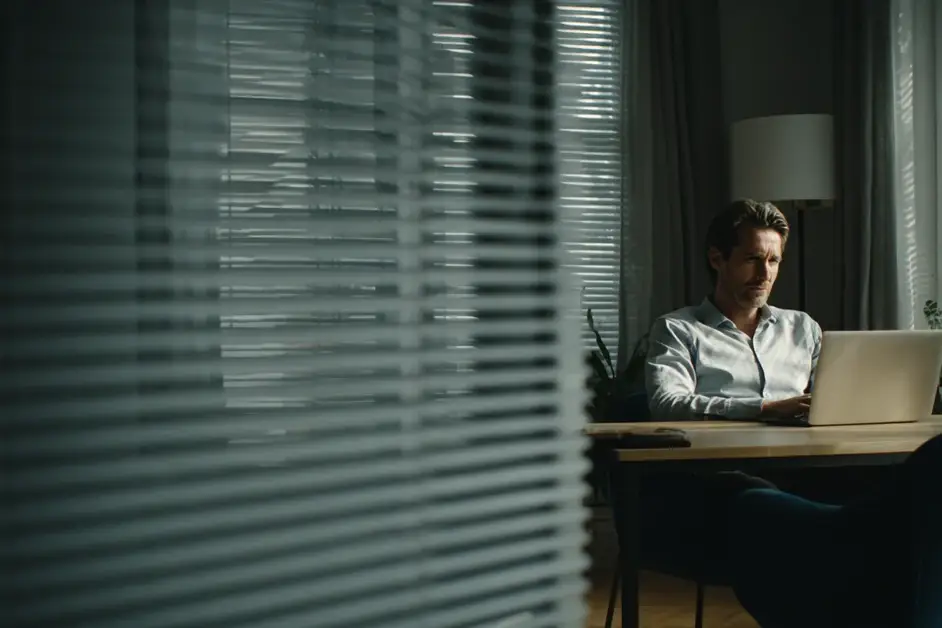
Specialized attachment-focused individual therapy for adults whose relationships keep running the same painful pattern navigating attachment issues rooted in childhood, from a therapist who understands why the patterns follow you into every relationship until they are treated, not managed.
The Quick Takeaway
Attachment issues are relational patterns, anxious, avoidant, or disorganized, installed by early caregiving and carried into adult relationships. CEREVITY provides concierge private-pay individual therapy nationwide for high-performing professionals, pairing attachment-trained clinicians with complete privacy and same-week availability.
Licensed Clinical Psychologist, CEREVITY
Therapy for Attachment Issues
Rewiring Patterns Set in Childhood
Last Updated: July 2026
You can read a boardroom in seconds. But when someone gets close, the old program runs: cling or vanish, audit or armor. You have watched yourself do it and could not stop. Here’s what actually works, and what most advice gets wrong.
Table of Contents
– What Is Attachment Issues and Why Does It Affect Adults?
– Why Online Therapy Works for Professionals
– How Does Attachment-Focused Therapy Help With Insecure Attachment?
– Common Challenges We Address
– Evidence-Based Treatment Approaches
– Understanding the Investment in Private-Pay Care
– What the Research Shows
– Frequently Asked Questions
– Ready to Earn Security?
What Is Attachment Issues and Why Does It Affect High Achievers?
Understanding the Wiring Underneath Your Relationships
High-functioning adults face carry attachment injuries that stay invisible precisely because competence compensates for them everywhere except intimacy that what their professional success would predict don’t:
🧩 The Original Blueprint
The Original Blueprint is the relational operating system drawn in your first years: how safe closeness is, whether needs get met or punished, whether people stay. Adults do not consult the blueprint; they build from it, automatically, in every relationship. Therapy does not demolish the building. It redraws the blueprint, which clinicians call earned security.
🔌 The Anxious Program
Anxious attachment runs on scarcity: love felt inconsistent early, so the adult monitors constantly, reads distance into small signals, and seeks reassurance that never quite lands. It is not neediness. It is a detection system calibrated by an unpredictable childhood.
🛡 The Avoidant Program
Avoidant attachment runs on self-sufficiency: needs were met with distance or disapproval, so the adult learned to stop having them publicly. Closeness triggers the exits. Research shows avoidant adults are also the least likely to seek therapy and the most likely to leave it, which is worth naming out loud.
🌀 The Disorganized Loop
Disorganized attachment carries both programs at once, usually where caregiving was frightening as well as inconsistent: crave closeness, fear it on arrival, punish it after. It is the most painful pattern and the one most tied to early trauma, and it responds to careful, phased clinical work.
💔 Competence as Camouflage
High performers hide attachment injury behind competence: the career gets the secure behavior, relationships get the leftovers. Success becomes evidence nothing is wrong, which delays treatment by decades while the pattern quietly prices itself into every partnership.
🪨 The Partner-Selection Engine
The blueprint also picks your partners. Anxious wiring finds avoidant partners with uncanny reliability, and each confirms the other’s worst expectations. What looks like bad luck in love is often the blueprint doing exactly what it was drawn to do.
Research from research in the National Library of Medicine indicates that reductions in attachment anxiety and avoidance during therapy reliably predict improved mental health outcomes, with independent of the specific therapy modality used cited as the primary contributing factor.1
Where the Blueprint Comes From, and Why It Persists
adults with insecure attachment face additional unique challenges:
⚖ Installed, Not Chosen
Attachment style is not a personality choice; it is an adaptation a child made to the caregiving actually available. That reframe matters clinically: there is nothing wrong with the machine. It simply learned the rules of a house you no longer live in.
📈 Stress Reveals the Wiring
Under pressure, adults regress to the blueprint: occupational stress research during the pandemic found attachment insecurity strongly shaped how workers responded to prolonged strain. This is why the pattern surfaces hardest during a raise, a merger, a new baby, exactly when you need it least.
💬 Earned Security Is Real
The clinical term is earned security: adults who began anxious, avoidant, or disorganized and, through therapeutic work and healthy relationships, test as secure. It is one of the most hopeful findings in the field, and it is the explicit target of this treatment.
The Partner's Experience
If you’re the people in relationship with the pattern:
🔬 Loving Someone Behind Armor
Partners of avoidant adults describe closeness that arrives in rations and disappears without explanation. The distance is not a verdict on them; it is old armor. But without that frame, partners exhaust themselves trying to be good enough to end a pattern they did not cause.
🔒 The Pursue-Withdraw Dance
One pursues, the other withdraws, and each step by either partner triggers the next. The dance predates the couple, but the couple performs it. Naming it as choreography, not character, is often the first moment both people stop blaming and start working.
📅 Taking the Program Personally
The hardest part for partners is that attachment behavior feels personal: the clinging reads as distrust, the distance as rejection. Understanding it as a program installed decades ago converts resentment into patience, and patience into an actual role in the healing.
Why Online Therapy Works for Adults
Practical Benefits of Nationwide Virtual Sessions
Online therapy solves practical challenges that make traditional care difficult for professionals:
🎯 Lower Threshold Through the Armor
Attachment work is exposure work: being seen is the very thing the wiring guards against. Sessions from your own home lower that threshold, and the private-pay structure means no insurance record of any of it, ever.
🚫 One Secure Relationship, Uninterrupted
The therapeutic relationship IS the treatment in attachment work, which makes continuity everything. A nationwide network keeps the same clinician through moves and job changes, so the first secure relationship in the room never has to restart.
📉 Matched to Attachment Specialists
Attachment-trained clinicians are a specialization, not a default. CEREVITY matches you to therapists who work in attachment and trauma specifically, with extended sessions available, because this work opens slowly and closes fast.
How Does Attachment-Focused Therapy Help With Insecure Attachment?
Attachment-focused therapy works because it is relational at its core: the reliability of the therapeutic relationship itself becomes the corrective data the blueprint never got. Within that frame, the work maps your specific pattern, connects it to its origins without turning therapy into archaeology for its own sake, and then runs live experiments in relating differently. For high achievers in therapy, one adjustment matters: the competence that runs your career will try to run your treatment, performing insight instead of risking contact, and a good attachment therapist knows the move.
The evidence is encouraging on two fronts. First, attachment patterns moderate how people respond to treatment, so tailoring the approach to your wiring measurably improves engagement. Second, movement is the norm, not the exception: decreases in attachment anxiety and avoidance during therapy predict better outcomes across modalities. Where the pattern travels with anxiety or depression, integrated treatment runs alongside, and where early experiences were frightening rather than merely inconsistent, the trauma work is paced deliberately. Couples in the pursue-withdraw dance often add couples therapy once individual footing is solid, and many clients use extended 90-minute sessions because armor takes half a session just to set down.
Randomized research on generalized anxiety treatment found attachment orientation moderated outcomes across therapy types, and pandemic-era occupational studies documented attachment insecurity shaping responses to prolonged severe stress.
| Standard Insurance-Based Therapy | CEREVITY’s Specialized Approach |
|---|---|
| “You just have to learn to love yourself first” | “We rewire the relational blueprint through an actual secure relationship, because attachment injuries heal in connection, not in isolation” |
| “Read about your attachment style and communicate it to your partner” | “Insight is the map, not the road: we run live relational experiments until the nervous system, not just the intellect, learns closeness is safe” |
| “Pick more secure partners next time” | “We treat the partner-selection engine itself, so security stops being advice and becomes what you are actually drawn to” |
Your Relationships Deserves Excellence, So Does Your Security
Join adults done repeating the pattern who’ve stopped sacrificing your closeness for your independence
Confidential • Flexible • Attachment-Trained
Common Challenges We Address
⚠ The Same Ending, Every Time
The pattern: Different partners, same third act: the withdrawal, the audit, the exit, on either side of it. Clients arrive describing bad luck or bad taste in partners, and the intake history quietly shows the same pattern running since their first relationships, sometimes since the playground.
What we address: Attachment mapping identifies the specific program and its triggers, emotion-focused work metabolizes the original injuries feeding it, and graduated relational experiments, inside and outside the session, install the new pattern at the nervous system level where the old one lives.
🕑 Navigating Relationship & Marital Stress
The pattern: Career pressure feeds the pattern its favorite fuel: the avoidant partner gets endless legitimate reasons for distance, the anxious partner gets endless ambiguous signals to monitor. The marriage ends up running the blueprint at full speed while both people call it a scheduling problem.
What we address: Individual work separates what belongs to the calendar from what belongs to the wiring, then rebuilds the couple’s contact rituals deliberately: how you leave, how you return, how needs get voiced before they become audits. Small structural changes, repeated, are how blueprints actually get redrawn.
Evidence-Based Treatment Approaches
We draw from multiple research-supported individual approaches:
Treatment Modality 1
Emotionally focused therapy and attachment-based approaches work directly at the pattern level: identifying the protest behaviors and armor, accessing the primary emotion underneath, and restructuring the bond so security is experienced rather than described. This is the modality family built for exactly this problem.
Treatment Modality 2
Schema therapy and psychodynamic work address the blueprint’s deeper entries: the early maladaptive schemas, abandonment, defectiveness, emotional deprivation, that attachment injuries write, and the compensations built on top of them. For high performers, this is usually where the overwork finally makes sense.
Understanding the Investment in Private-Pay Care
Investing in Your Continuous High Performance
At CEREVITY, our online individual therapy sessions are structured as a direct investment in your mental agility and overall well-being. The investment includes:
– Licensed mental health professional specializing in attachment and relational trauma
– Evidence-based, one-on-one approaches proven effective for insecure attachment patterns
– Flexible online scheduling including evenings and weekends
– Complete privacy with no insurance involvement or red tape
– professionals expertise and understanding
– Outcome tracking and progress measurement
The Cost of the Untreated Blueprint Going Unaddressed
Consider what’s at stake when insecure attachment patterns goes unaddressed:
👥 The Pattern Compounds Its Evidence
Every relationship the pattern ends becomes proof the pattern was right: people leave, closeness costs, needs get punished. Untreated attachment injury curates its own confirming dataset, and each cycle makes the armor thicker and the next attempt harder.
💎 The Next Generation’s Blueprint
Blueprints transmit: the parent who cannot tolerate their child’s needs, or cannot let the child separate, is usually running their own untreated program. Treating your attachment pattern is one of the few interventions that measurably changes what your children inherit.
What the Research Shows
The attachment literature is one of psychology’s deepest evidence bases. Randomized clinical research shows adult attachment orientation moderates treatment outcomes, meaning therapy tailored to the pattern works better than one-size-fits-all care. Studies of prolonged occupational stress document attachment insecurity shaping real-world resilience in adults, not just childhood outcomes. Systematic reviews of contemplative and relational interventions find attachment orientations are modifiable in adulthood. And across modalities, reductions in attachment anxiety and avoidance during treatment predict improved mental health outcomes: the blueprint moves, and when it moves, everything built on it improves.
Research on earned security shows adults who began life with insecure attachment can, through therapeutic work and secure relationships, come to function and test as securely attached. For professionals who assume the pattern is simply who they are, that is the clinically accurate correction: it is who you adapted to be, and adaptation runs in both directions.
Clinician’s Perspective
“In my work with high-achieving adults, the attachment pattern almost never presents as a relationship problem; it presents as a resume. The client who never needed anyone built a career out of it, and the moment I respect most is when they realize their independence was a child’s solution to a house that could not hold their needs. Watching someone risk being known for the first time, in real time, is the privilege of this specialization.”
Lucia Hernandez, Ph.D., CEREVITY
Frequently Asked Questions
Common signs include: monitoring a partner’s tone and response times for threat, needing reassurance that never quite lands, feeling suffocated the moment closeness deepens, exits that fire automatically after intimacy, choosing emotionally unavailable partners repeatedly, keeping your needs private as a policy, and relationships that all end in the same third act. Physically: a nervous system that treats closeness like exposure, tension when your phone shows their name, relief when plans cancel. If several of these run on schedule across different partners, that is the blueprint, and it is treatable at any age.
Standard advice treats attachment as a communication problem: share your style, use your words. For high performers the wiring is deeper and better defended: competence camouflages it, success argues nothing is wrong, and the armor has a resume. CEREVITY clinicians work with executives, physicians, attorneys, and founders on exactly this pattern, privately, with attachment-trained specialists, and without asking you to dismantle the independence that built your career, only the armor wearing its uniform.
Concierge individual therapy at CEREVITY is specialized mental health support for high-functioning adults whose attachment patterns keep repeating in close relationships. Unlike general therapy, our clinicians understand how competence at work can coexist with instability at home. They will not minimize the problem or suggest you simply set better boundaries. They recognize that early relational learning creates challenges that require a therapist trained in attachment and trauma work. CEREVITY provides this support through secure telehealth nationwide.
As a private-pay concierge network, we offer structured investments in your mental health without the restrictions or privacy risks of insurance. You can review our full fee schedule and specific session lengths directly on our website. While this costs more than insurance copays, it provides the flexibility, total privacy, and highly specialized care that standard options cannot offer. View our current rates here.
Privacy is foundational to our network. As a private-pay network, your sessions never appear on insurance records or EOBs that could be seen by employers, boards, or family members. We use HIPAA-compliant nationwide telehealth platforms, and you can attend sessions from anywhere with a private internet connection.
Related Reading
If this resonated, these CEREVITY pages go deeper:
Attachment work happens in individual therapy first, and this page explains the format and what to expect.
Imposter feelings and attachment injury share the defectiveness schema, and this page covers that overlap.
When early caregiving was frightening rather than merely inconsistent, three-hour intensives give the trauma work the room it needs.
Ready to Earn Security?
If you’re adults ready to redraw the blueprint struggling with insecure attachment patterns, you don’t have to choose between work travel and family logistics. CEREVITY provides specialized, private-pay care that understands both your pace and your privacy, with flexible scheduling, complete privacy, and practical approaches that fit demanding professional lives.
Available by appointment 7 days a week, 8 AM to 8 PM (PST)

About Lucia Hernandez, Ph.D.
Dr. Lucia Hernandez is a licensed clinical psychologist at CEREVITY, a boutique concierge therapy network serving high-achieving professionals throughout California, Texas, and Florida. With specialized training in trauma-informed care and attachment-focused therapy, Dr. Hernandez brings deep expertise in helping accomplished individuals address the unresolved experiences that often underlie chronic stress, anxiety, and relationship difficulties. Her work focuses on helping clients move beyond surface-level coping toward genuine healing, breaking free from patterns that limit their leadership and personal lives. Dr. Hernandez’s approach combines depth psychology with relationally focused techniques, offering the transformative care that driven professionals need to lead with greater emotional intelligence. View Full Bio →
References
1. Newman, M. G., et al., PubMed Central, National Library of Medicine. (2016). Adult Attachment as a Moderator of Treatment Outcome for Generalized Anxiety Disorder.
2. Adult attachment and occupational stress in hospital workers, PubMed Central. (2022). Adult attachment insecurity and responses to prolonged severe occupational stress in hospital workers.
3. Systematic map of contemplative interventions and adult attachment, PubMed Central. (2025). Mindfulness, Loving-Kindness, and Compassion-Based Interventions and Adult Attachment Orientations: A Systematic Map.
4. American Psychological Association. (2023). Understanding Psychotherapy and How It Works.
5. National Institute of Mental Health. (2024). Caring for Your Mental Health.
⚠️ Crisis Resources
If you are experiencing a mental health crisis or having thoughts of suicide, please reach out immediately:
988 Suicide & Crisis Lifeline: Call or text 988
Crisis Text Line: Text HOME to 741741
National Alliance on Mental Illness (NAMI): 1-800-950-NAMI (6264)